As the 2025-26 NBA season reaches its first quarter mark, the rookie class is beginning to separate itself. From Kon Knippel’s surprising emergence in Charlotte to Cooper Flagg’s adjustment in Dallas, first-year players are making their mark across the league. This comprehensive ranking evaluates the top 10 rookies based on performance, team impact, and development trajectory through December 2025.
Evaluating the 2025-26 Rookie Class
The debut editions of MVP races and power rankings are behind us. Now it’s time to assess the rookies making waves in their first NBA season.
Before diving into the rankings, let’s establish two fundamental criteria. First, players must have appeared in at least 15 games to qualify—roughly two-thirds of the season so far. Dylan Harper started strong, but with only ten games played, it’s impossible to rank him fairly either high or low. If health issues stay in the rearview mirror, he’ll emerge as a leader. Second, team results matter significantly. We value a stable role with modest statistics on a competitive team over inflated numbers on a lottery-bound squad, because those contributions help win games.
10. Will Richard, Golden State Warriors (11-12)
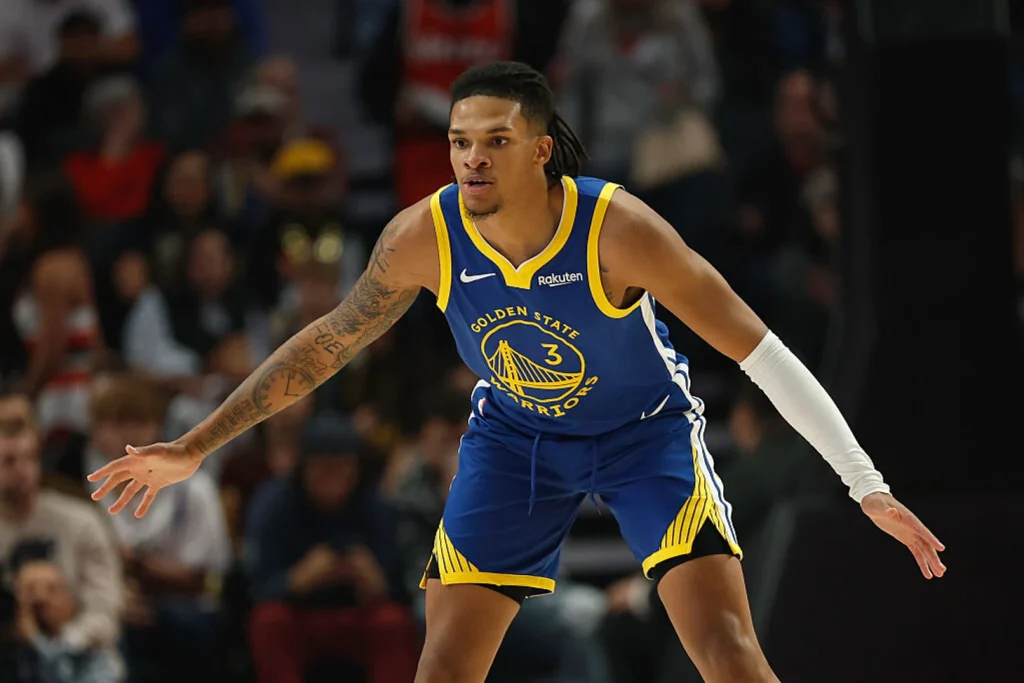
Stats: 8.3 points, 2.8 rebounds, 1.2 assists, 1.0 steal, 0.6 turnovers in 18.7 minutes
Shooting: 53.2% FG, 38.5% 3PT, 75.9% FT
Plenty of rookies post higher scoring numbers, but Richard has become an integral part of the Warriors’ rotation, helping Golden State climb out of the play-in zone. For our evaluation, honestly earned minutes on a serious team outweigh a couple of extra highlights on a rebuilding roster.
The 56th draft pick has worked his way into the starting lineup, providing energy to an aging roster. At 6’3″, he competes defensively, battles on the boards (1.1 offensive rebounds per game), and cuts smartly to receive passes inside. Most importantly, he drains open threes without hesitation—nearly 60% of his field goal attempts come from beyond the arc, and he’s converting at a quality rate. He rarely misses two-point shots because he doesn’t take difficult attempts, only finishing at the rim.
The Warriors couldn’t have asked for much more. This roster would have been unstoppable five years ago; now it looks dangerous only in short bursts. It was assembled for playoff contention, but reaching the postseason requires young, energized players who can contribute night after night during an intense schedule. Richard delivers exactly that, earning his spot in the top 10.
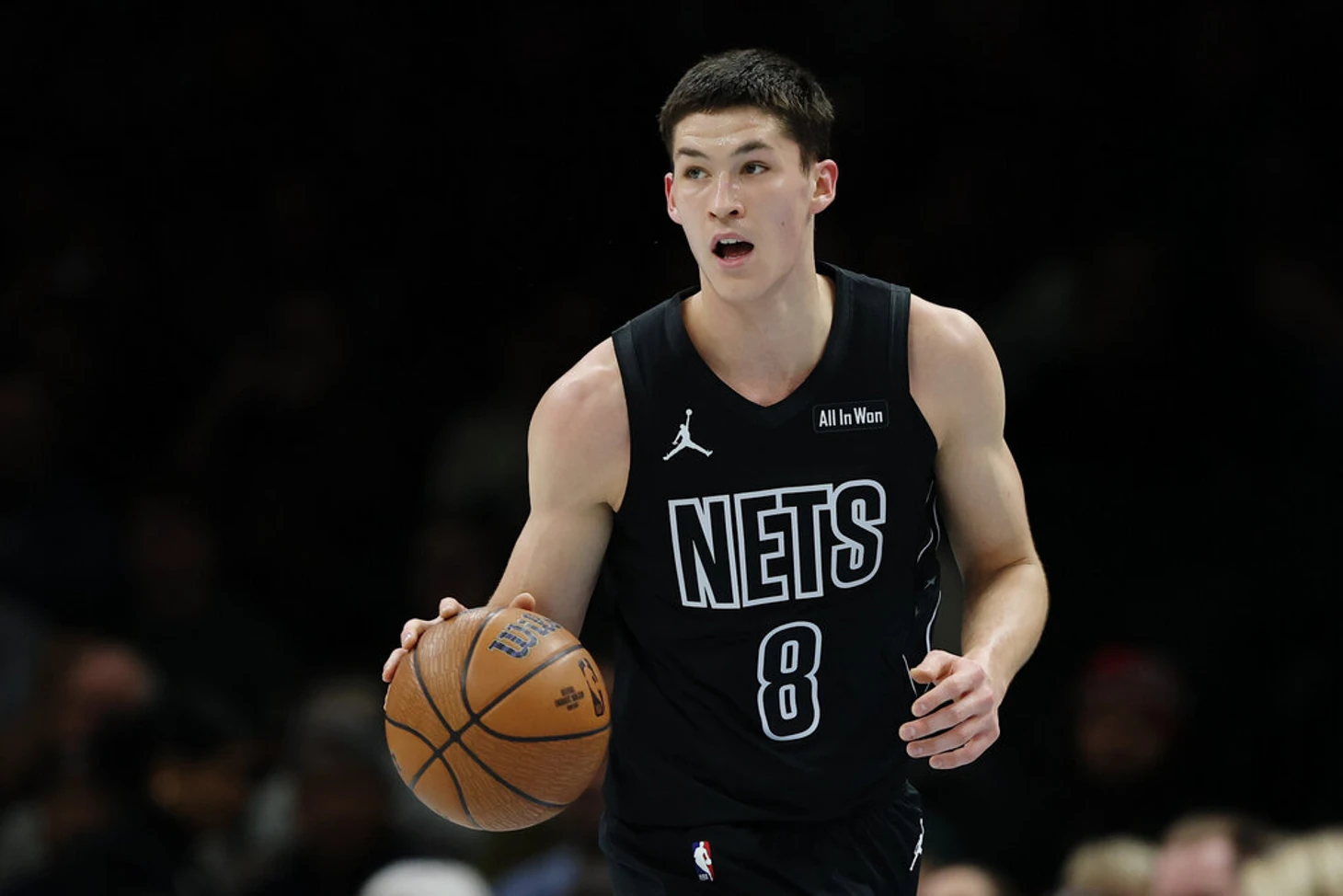
9. Egor Demin, Brooklyn Nets (5-17)
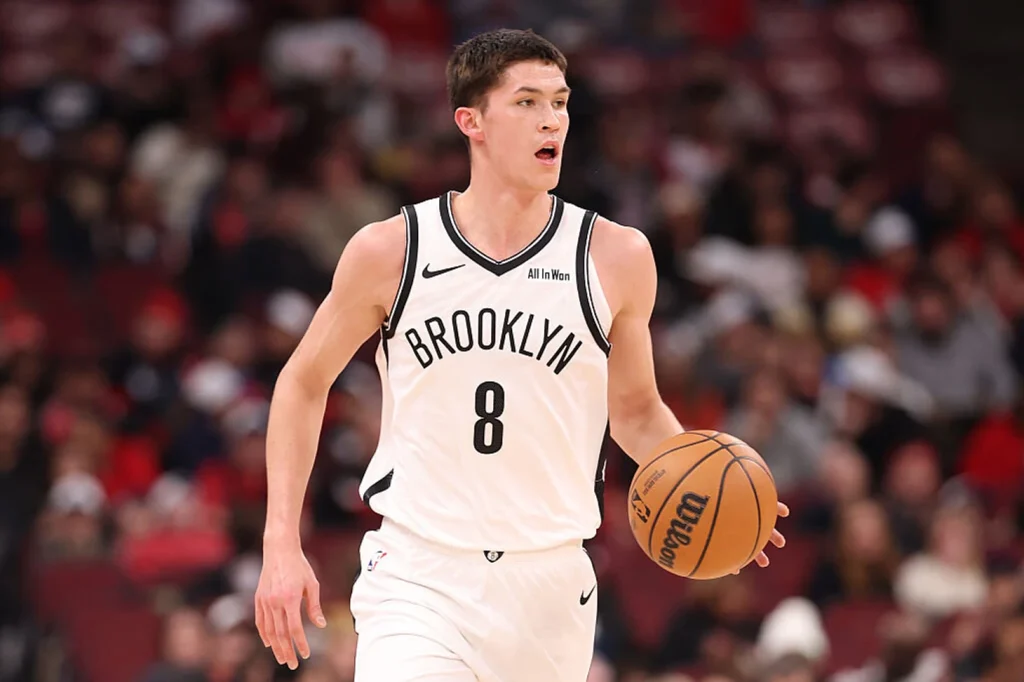
Stats: 8.6 points, 3.4 rebounds, 3.6 assists, 1.7 turnovers in 23 minutes
Shooting: 37.7% FG, 35.0% 3PT, 85.7% FT
The short description of Egor’s NBA journey so far: adequate. He’s moved into the starting lineup, receiving 25-30 minutes over the past four weeks while maintaining his level. He’s adjusting to everything happening around him.
Clearly successful and disastrous games are rare; instead, there’s an abundance of solid, steady performances. He’s noticeably improving in reading the game and defensive positioning. It’s not about basketball IQ—that was never in doubt. Rather, knowledge, habits, and thought processes require adaptation to new speeds, tendencies, and opponents’ physical capabilities. The average NBA player covers the same distance faster than an NCAA player, jumps higher, plays more physically, and recovers to help defense quicker. This new coordinate system must be internalized—similar to translating thoughts from your native language when communicating in a foreign one. Initially, it takes time.
Demin has passed his first geometry exam. He reads passing lanes better and moves more intelligently. Over his last eight games, he’s failed to record a steal only once. If this continues, he’ll feel comfortable in zone defense. Man-to-man defense remains much weaker. He still lacks the physicality, getting beaten too often on sharp first steps or overpowered on drives. Significant body work lies ahead.
Until he reaches the next level of physical development, his role will remain roughly the same. Currently, his body’s capabilities create clear boundaries within which he must operate. Chris Paul possesses a brilliant mind, enormous experience, and unlimited tricks, but diminished athleticism outweighs everything else. The faster muscle mass is added, the higher the injury risk—biomechanics can’t be fooled. Expecting a sudden leap would be naive and even dangerous. Brooklyn doesn’t need tomorrow; it needs sustainable development. That’s an excellent reason to exercise patience and temper expectations.
Among the 14 most productive rookies in the NBA, only one shoots below 40% from the field: Egor, at 37.7%. This reflects his forced playing style. Two-thirds of his shots come from beyond the arc. He converts 55% at the rim—low by NBA standards. Not yet ready for contact drives, he attacks more from the perimeter, causing his percentage to drop.
More concerning are drives initiated 15-20 feet from the basket where Demin raises his head, sees a wall of defenders ahead, and hastily tries to create a pass. It doesn’t happen often, but it does occur. Eliminating such plays is the immediate priority, while physicality, shooting, and ball-handling represent a marathon with multiple intermediate finish lines.
So why is he in the top 10 with modest numbers and weak team results? He’s the second-best playmaker among rookies. He never falls out of games despite significant minutes, understands his role, consistently provides moderate value, and doesn’t force anything. If this continues, he’ll finish eighth to tenth in Rookie of the Year voting and make the All-Rookie Second Team. That’s solid progress.
Brooklyn has won two straight and gone 4-5 over their last nine games. Who would have thought that attempts to boost Cam Thomas’s trade value would fail, and the team would play more confidently without him? Danny Wolff has finally returned, allowing them to run basic actions with two or three quick passes—already something.
Full chemistry between the rookies doesn’t exist yet, which is completely understandable. One missed 2.5 months of training camp; the other sprained his ankle before the season started and only recently entered the rotation. Unlike Demin, Wolff is trusted to handle the ball extensively and create. Well, he’s also two years older.
Early in the season, Egor was forced to stay on the perimeter, trying to figure out how to integrate into what was happening around him. A two-meter guard with court vision wasn’t required by Brooklyn—possessions and shots were distributed without him. The departures of Thomas and Mann changed the equation; more players are now actively involved in offensive actions. Developing chemistry with Danny represents a resource for increasing Egor’s statistics in the coming weeks.
An interesting note: Demin has played only two games against Western Conference opponents—San Antonio and Minnesota (he missed the back-to-back with Houston). Average stats: 2.5 points, 3.0 rebounds, 2.5 assists, 2.0 turnovers; 2-of-9 shooting, 1-of-7 from three (including the infamous attempt over Wembanyama). First, this was at the very beginning of the season, before moving into the starting lineup. Second, the Spurs and Timberwolves know about physical defense. Utah and New Orleans don’t look like stern tests, but the December 13 game against Dallas holds particular interest.
8. Ryan Kalkbrenner, Charlotte Hornets (7-16)
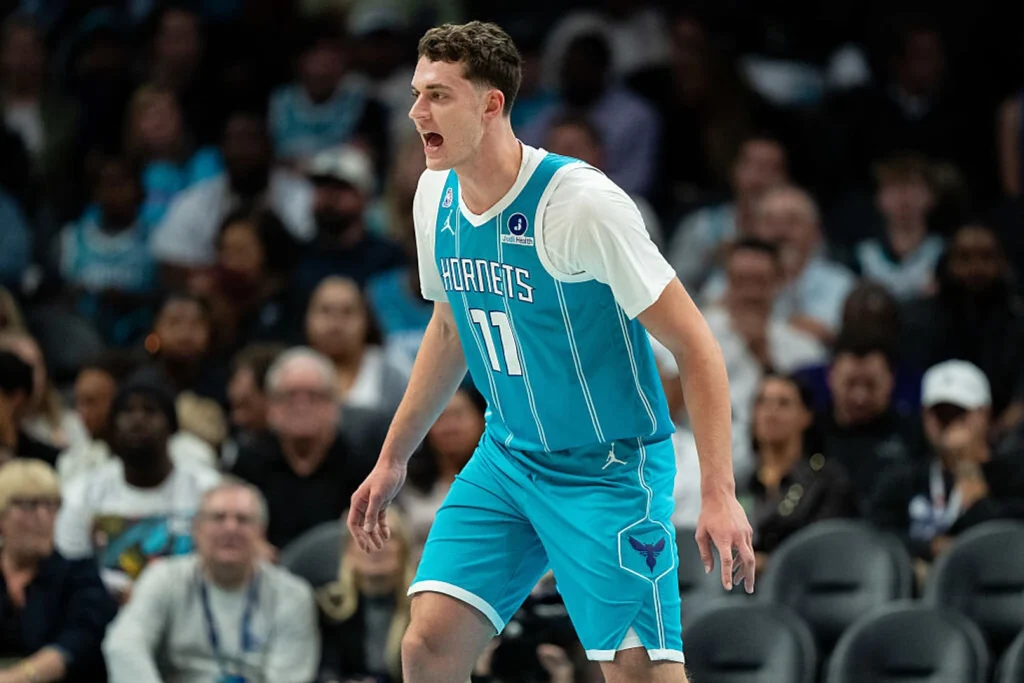
Stats: 9.0 points, 6.8 rebounds, 1.9 blocks, 1.3 turnovers in 25.6 minutes
Shooting: 79.8% FG, 0-of-1 3PT, 80.6% FT
The most consistent rookie. Regardless of circumstances, he approaches a double-double in 20-30 minutes while adding a couple of blocks. He leads the NBA in field goal percentage among players with 80+ attempts. A classic rim-runner and rim-protector—he finishes at the basket and defends the paint. Simple, clear, reasonably reliable, and… boring? Actually, no.
Here’s the paradox. On one hand, Kalkbrenner is close to his ceiling: 23 years old, limited skill set, won’t improve dramatically. On the other hand, he’s precisely the player who could significantly raise the team’s ceiling.
How? Charlotte coach Charles Lee previously assisted Mike Budenholzer, then worked in Boston during their championship year. He favors wide-open offense and three-point shooting. Only three players don’t shoot from beyond the arc: Mason Plumlee, Moussa Diabate, and Kalkbrenner. The first is rapidly approaching retirement and barely appears. The second struggles even with free throws, though gradually improving.
Kalkbrenner is more interesting. Over his last two college seasons, he attempted 115 threes, averaging over 3 per game. He made 37—a respectable 35.2% for a center. At the draft combine, he drained 17-of-23 from deep. In short, he possesses a serviceable shot.
If desired, Charlotte could implement five-out spacing tomorrow, assembling a lineup with five capable three-point shooters. They have a diet version of Milwaukee-era Brook Lopez. The offense would gain an additional dimension, creating more space and driving opportunities. However, the coaching staff prefers almost always having a player on the floor who fundamentally ignores three-pointers. Kalkbrenner hasn’t even attempted a mid-range shot—not once in 22 games with substantial minutes.
This prompts certain thoughts. Perhaps it’s simply too early, and the staff doesn’t want to burden the rookie. Or maybe they want to artificially suppress results and finish lower to secure a better draft pick.
7. Ace Bailey, Utah Jazz (8-14)
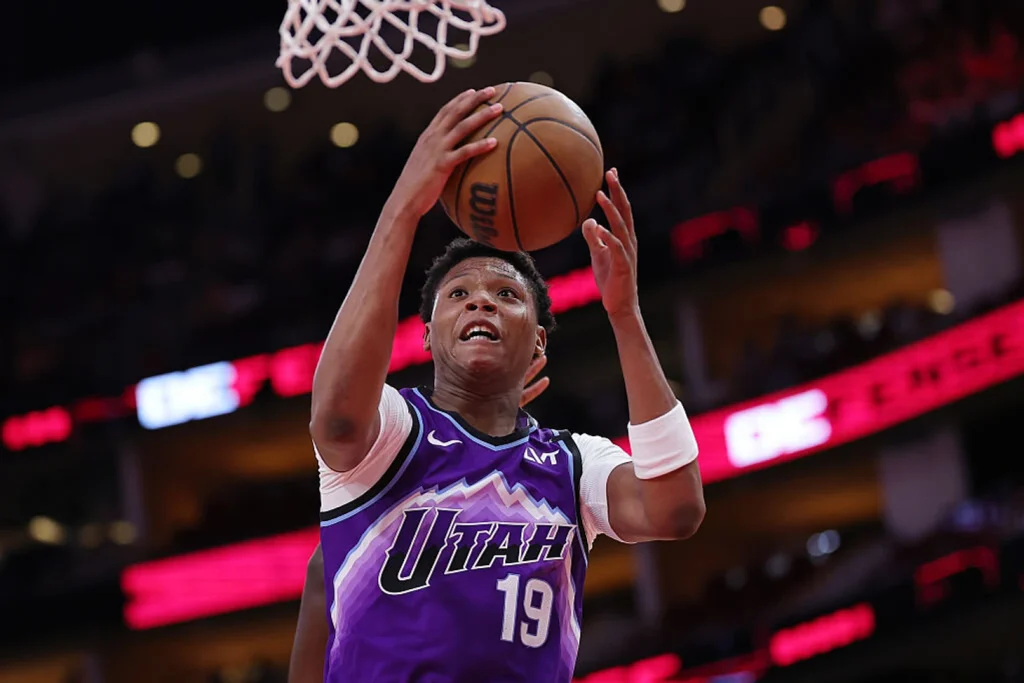
Stats: 10.3 points, 3.4 rebounds, 1.8 assists, 1.3 turnovers in 22.2 minutes
Shooting: 46.2% FG, 35.8% 3PT, 84.2% FT
He completely bombed his debut, missing everything. Four weeks ago, he moved into the starting lineup and became more productive. He’s gradually increasing his minutes, scoring 20+ points three times—all with quality efficiency.
Bailey since November 1: 12.3 points, 3.2 rebounds, 1.8 assists, 1.1 steals; 51% FG, 39% 3PT, 80% FT
He handles the ball much less than expected; the vast majority of his attacks come off catches or after one or two dribbles. In this format, he’s NBA-effective right now. Over 80% of his field goals come after assists. He needs to grow into isolation situations. When he tries to complicate things, problems emerge. Decision-making quality suffers, and defenders’ physicality is entirely different. What worked in college at best provides no advantage here; at worst, it leads to turnovers or blocks.
Significant body work lies ahead. Jazz coach Will Hardy highlights the player’s composure and calmness. After summer drama involving refusing workouts with several clubs, Bailey drew conclusions and fired his agent. Whether the agent caused such behavior doesn’t particularly matter. Even if not, the move sends a message and allows a fresh start: acknowledged mistakes, ready to work. Almost classic accountability.
Bailey distanced himself from questionable associations, accepted a limited role, and proved quite effective in it. Perfect for seventh place.
6. Dereck Queen, New Orleans Pelicans (3-20)
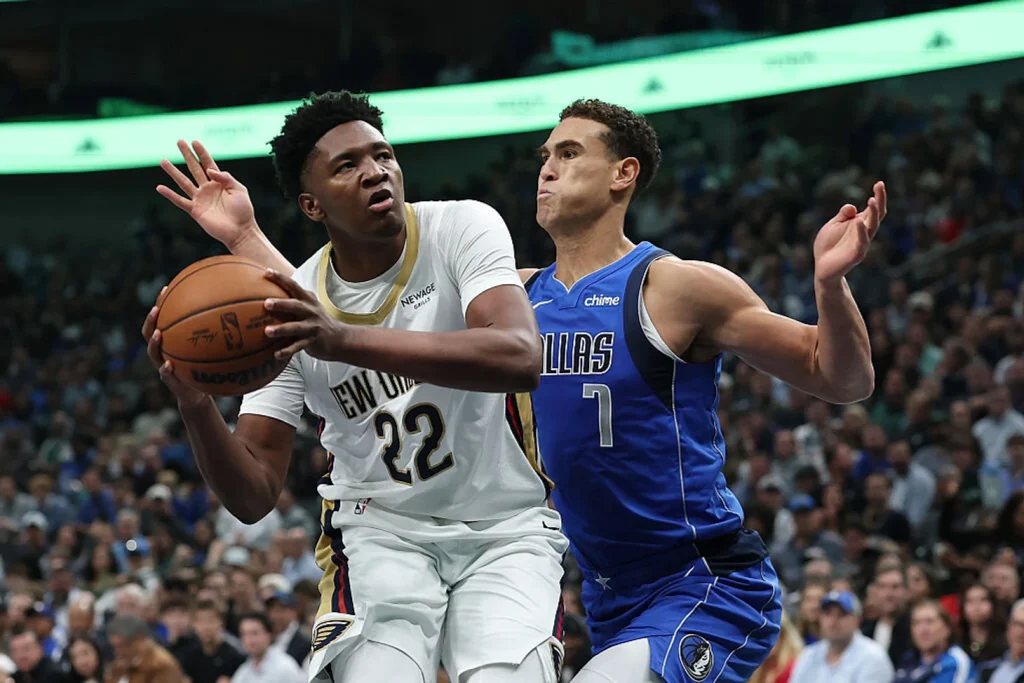
Stats: 12.3 points, 6.2 rebounds, 3.5 assists, 1.0 steal, 2.2 turnovers in 24.3 minutes
Shooting: 48.3% FG, 11.8% 3PT, 77.4% FT
5. Jeremiah Fears, New Orleans Pelicans (3-20)
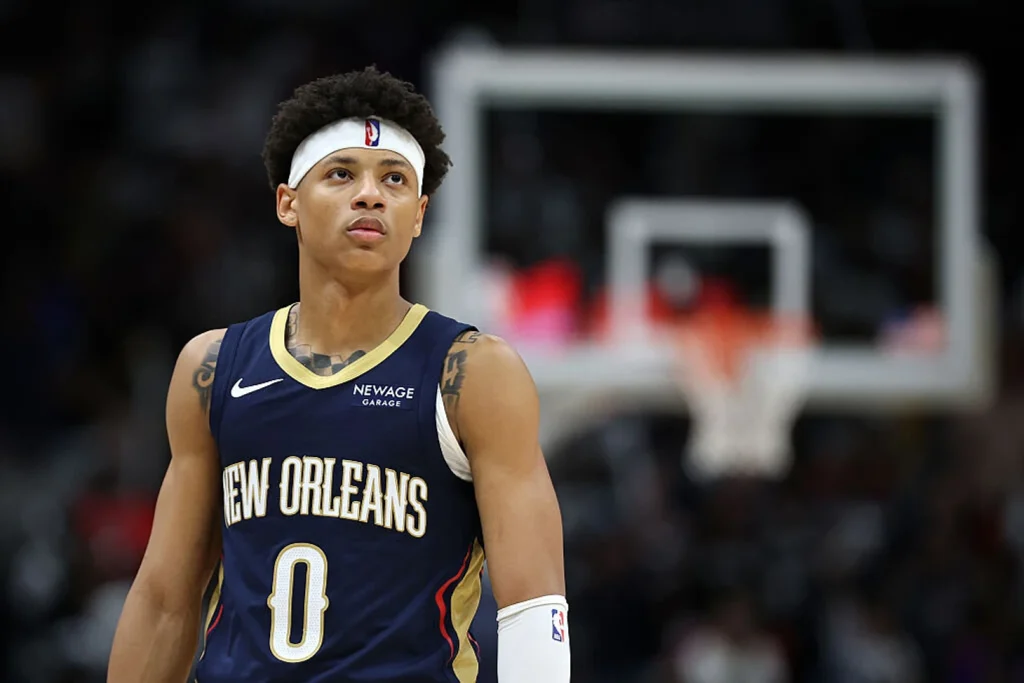
Stats: 15.7 points, 3.3 rebounds, 2.8 assists, 1.5 steals, 2.3 turnovers in 27.5 minutes
Shooting: 44.9% FG, 36.4% 3PT, 78.7% FT
Two circus performers from the league’s worst team. Both demonstrate they deserved high draft selection and occasionally flash brilliance. However, it’s meaningless: for the second straight year, New Orleans has been decimated by injuries, Zion Williamson trade talks have intensified again, and their own pick was generously gifted to Atlanta—ironically, for Dereck Queen.
Queen ranks slightly lower due to instability and tendency toward foolish fouls. After games with 25-30 minutes, he calmly follows with eight points on reduced playing time. He favors difficult shots, attacks frequently from mid-range at 36% accuracy, and holds the ball extensively. His dribbling is frankly average by NBA standards, resulting in last place on the team for ball-handling turnovers (18 total).
This style creates volatile impressions. When successful, he resembles Julius Randle. When defense is set, he makes numerous mistakes, disrupts ball movement, and looks disconnected. The potential is obvious, but there’s too much unnecessary and optional play right now—though allowances must be made for the team situation.
Recently, he apparently received firm requests from the new coaching staff to abandon three-pointers. In college, he attempted roughly one per game at 20% accuracy; in the NBA, he followed the same pattern but shot much worse. Over his last five games, he’s attempted just one three. The coaching staff is redirecting his game toward his strengths.
Fears is a quick, aggressive guard. Based on the evidence, he’s among the fastest and most explosive in the entire NBA. His speed is remarkable, first step impressive, footwork excellent. He recognizes no authority, challenging everyone including veterans like Jimmy Butler and Luka Dončić.
He manages to control himself when exceeding the speed limit, but in half-court offense, he stalls. He knows how to attack the rim and what to do in traffic. In other situations, he settles for low-percentage mid-range shots or barrels into two defenders. Sometimes he draws fouls, but in the NBA, this strategy more often ends in blocks or misses.
He ranks above his partner due to consistency—22 games played, reaching double figures in all but one.
4. VJ Edgecombe, Philadelphia 76ers (13-9)
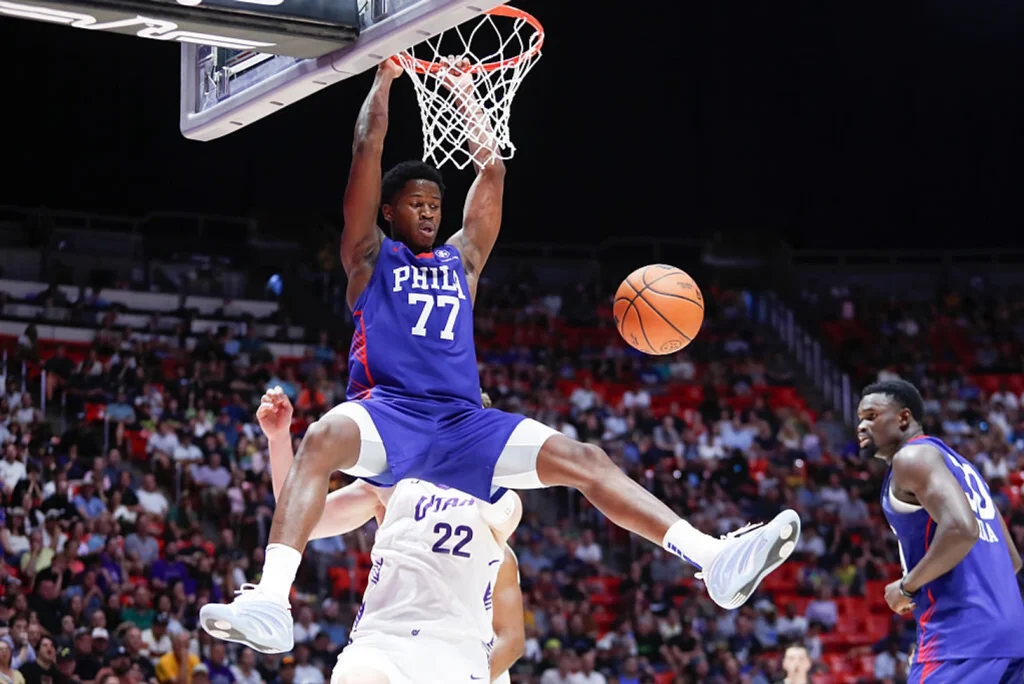
Stats: 14.7 points, 5.8 rebounds, 4.2 assists, 1.4 steals, 1.8 turnovers in 35.6 minutes
Shooting: 40.9% FG, 36.0% 3PT, 73.7% FT
He’s regressed after a fantastic start. The instability and vanished shooting touch by mid-November are easily explained—the kid was terribly overloaded. He started the season with five games of 39+ minutes. By November 20, he’d played 15 games; in 11 of them, he logged 37+ minutes. Tom Thibodeau was experiencing sympathy pains.
The problem isn’t just quantity—it’s high speeds. Through November 20, Philadelphia ranked seventh in pace and led in early offense scoring. They pushed tempo, ran, maintained intensity. Why mention November 20 twice? That’s when Edgecombe suffered an injury, missing a week-plus. After returning, he’s played two games with sensible restrictions (21 and 24 minutes).
For context, Jared McCain last season had a wonderful three-week stretch before his injury: 36.5, 40.5, and 39 minutes over five days—without overtime. Nick Nurse’s logic is understandable, but combining high tempo with massive workload for key players substantially increases injury risk.
Currently, only one NBA player averages 37+ minutes: Tyrese Maxey at 40.1. Second-place Luka Dončić sits at 36.9—a frightening gap.
VJ’s game relies on athleticism, explosiveness, and first-step quickness. Without fresh legs, efficiency drops sharply, and shooting form varies wildly. When fatigued, he can literally produce three or four attempts with noticeably different mechanics. Sometimes the legs fail, sometimes the torso tilts wrong.
Edgecombe in October: 21.2 points, 5.6 rebounds, 5.4 assists; 49.4% FG, 43.8% 3PT, 80% FT
In November: 12.3 points, 5.8 rebounds, 3.5 assists; 36.2% FG, 31.5% 3PT, 69.6% FT
Of course, Nurse’s rotation and fatigue aren’t the only factors. Philadelphia started 4-0, with Maxey and Edgecombe creating havoc. Opponents simply prepared better and took them more seriously. VJ takes many difficult shots; he needs to improve finishing in the paint.
Why so high? Best playmaker among rookies. Starter on a team with a winning record. Plays energetically and productively. Insufficient for top 3, but perfect for surpassing two players from bottom-dwelling New Orleans.
3. Cédric Coward, Memphis Grizzlies (10-13)
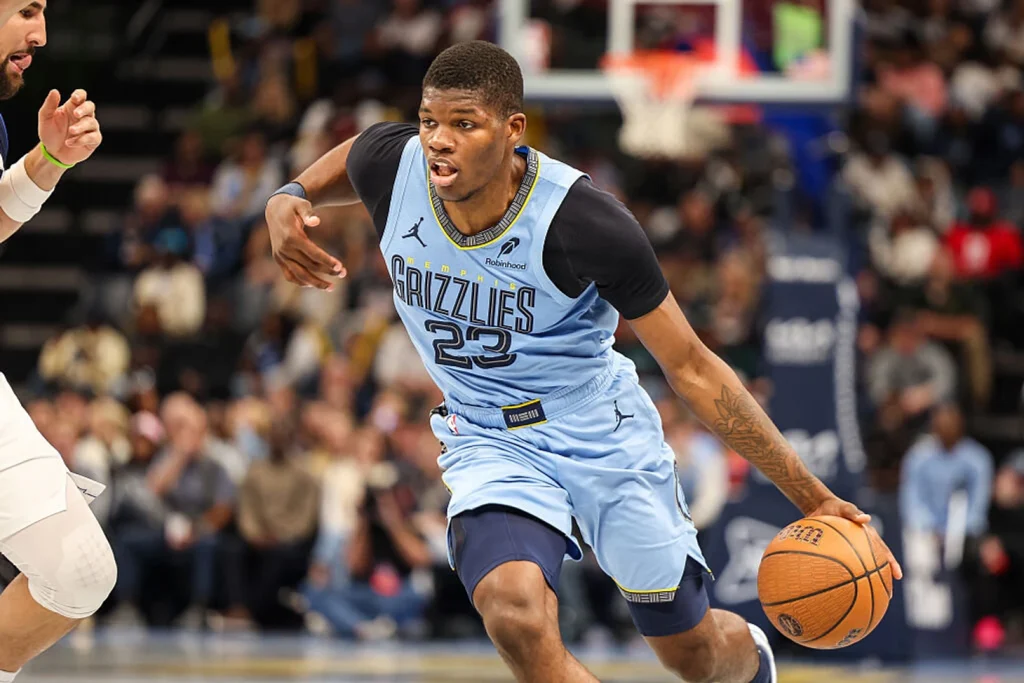
Stats: 13.0 points, 5.8 rebounds, 2.6 assists, 1.5 turnovers in 27 minutes
Shooting: 44.4% FG, 33.7% 3PT, 85.7% FT
Memphis traded up for him on draft night, sending their 16th pick plus Orlando’s 2028 first-rounder and two second-rounders for the 11th selection. It’s wonderful when pleasant expectations align with reality.
He’s a developed player for the present—turned 22 in September. Before the draft, Coward was compared to Keegan Murray and Desmond Bane. Does everything moderately well, defends multiple positions effectively, uses length intelligently, facilitates ball movement. All accurate.
Recently, however, his shot disappeared—one of Coward’s main weapons. In college, he converted around 40% from three on five attempts. Early NBA weeks followed that pattern, but over his last six games, he’s made only 2-of-23. The good news: even after this terrible stretch, his season percentage remains tolerable (33.7%).
Coward obviously trails the current version of Bane. However, Desmond also entered the NBA late; at 22, his statistics were considerably more modest. This Cédric isn’t a showman, but he genuinely does practically everything on the court, usually at an adequate level.
He’s missing corner threes—attempting them every game but converting just 21.4%. He shoots much better from straight-on and 45-degree angles. He’s too unstable currently. Plays energetically, moves constantly, competes hard. Visually, he seems to try and fight on the road but misses shots. The numbers completely agree:
Home (10 games): 15.2 points, 6.2 rebounds, 3.0 assists, 1.1 steals in 26.2 minutes; 51% FG, 44% 3PT, 91% FT
Road (12 games): 11.2 points, 5.5 rebounds, 2.3 assists, 0.2 steals in 28 minutes; 39.2% FG, 23.5% 3PT, 80% FT
Drawing energy from home crowds and shooting better is normal for a rookie, especially on a small sample. Much better than tightening up at home under additional pressure. The five-fold difference in steals is slightly concerning—significantly fewer despite more court time?
The decline coincided with a brutal road stretch. Nine of Memphis’s last 11 games were away from home over 21 days. So it wasn’t just Golden State suffering. We cautiously suggest it’s about lacking habits—college didn’t feature this schedule or airplane lifestyle. At some point, Cédric got lost: his energy tank remained half-empty, and in that state, his game loses its foundation. He gasped after a bright start and miscalculated his strength.
Fortunately, Memphis’s next three games are at home—enough to adapt, regain confidence, draw conclusions, and find stability.
Why in the top three? Indispensable part of a serious play-in contender. Never played fewer than 22 minutes; moved into the starting lineup mid-November and consistently logs 25-30. After Ja Morant’s injury, the Grizzlies went 5-3. First, that’s solid. Second, both losses to San Antonio and one to Denver aren’t embarrassing.
2. Cooper Flagg, Dallas Mavericks (8-16)
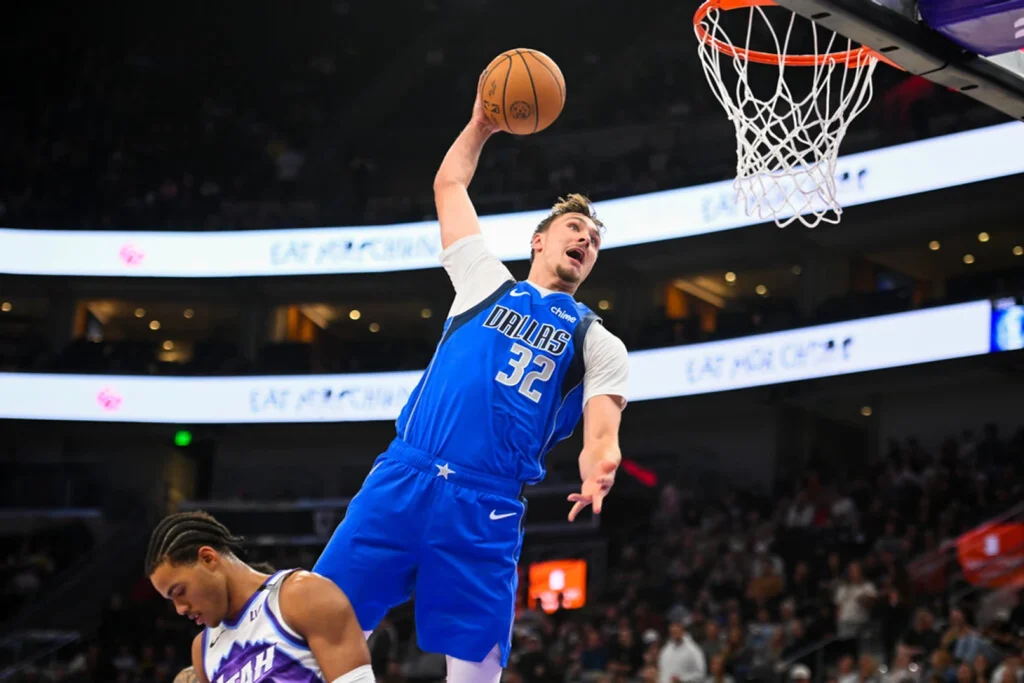
Stats: 17.3 points, 6.6 rebounds, 3.3 assists, 1.4 steals, 2.2 turnovers in 33.8 minutes
Shooting: 47.6% FG, 25.6% 3PT, 80% FT
The point guard experiment has ended. Shackles removed, efficiency soared. Dallas manages with Ryan Nembhard and Brandon Williams, while Flagg has shifted to a more comfortable role for this stage. He’s a secondary ball-handler—doesn’t hold the ball for 8-10 seconds but catches and decides.
Skilled defender: excellent one-on-one, nimble on help defense, doesn’t hesitate to direct teammates. He reads space brilliantly, flies into plays at full speed, and finishes. When Flagg accelerates, he doesn’t need a runway—a bottleneck suffices. Power and body work allow finishing through contact.
He loves and knows how to engage in fourth quarters. Already among the league’s top clutch scorers with high efficiency. He’s shooting 51% over his last 15 games—remarkable. When you leave a talented, motivated person alone, their value increases. At this pace, Flagg will soon emerge as the leader.
Personal records in scoring and assists keep falling, and Dallas plans to rise. With Nembhard and Williams running the offense, they’re a play-in team because defense wins. And with healthy Anthony Davis… wait, wrong team. Fantasy department on the third floor.
Dallas faces a wonderful back-to-back against Houston and Oklahoma City ahead. Perfect opportunity to evaluate their strength and understand the path forward. Then the schedule eases, offering chances to accumulate wins.
1. Kon Knippel, Charlotte Hornets (7-16)
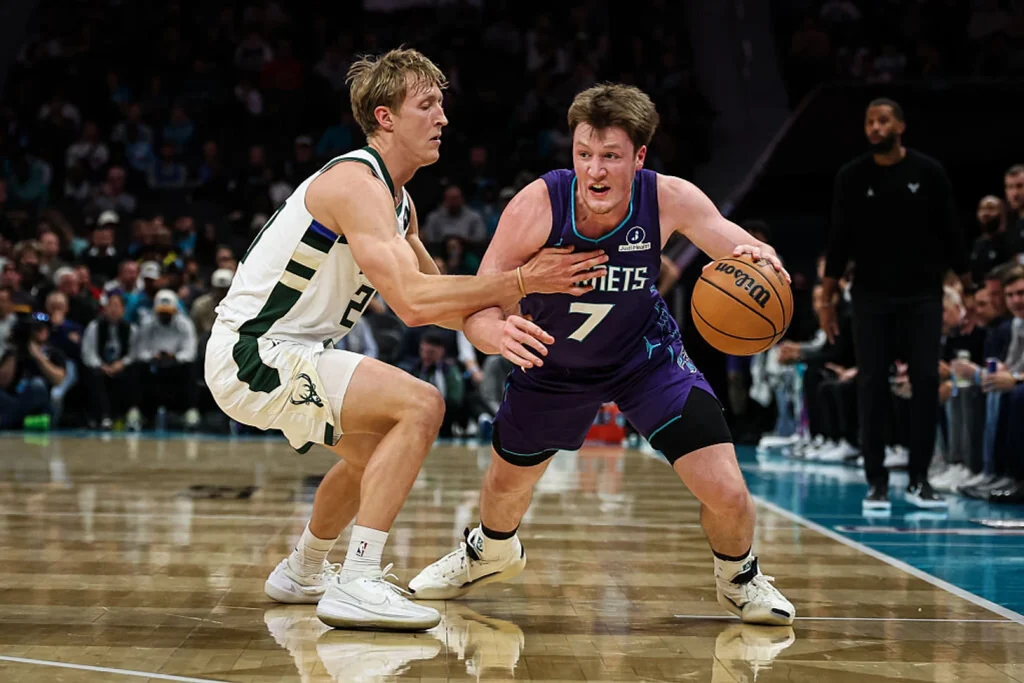
Stats: 18.1 points, 5.6 rebounds, 3.0 assists, 2.3 turnovers in 33.5 minutes
Shooting: 45.7% FG, 40.7% 3PT, 90.2% FT
We’ve arrived! Charlotte has created wonderful conditions for rookie development. At first glance, this sounds absurd.
Before last season, Charles Lee became head coach. Since 2014, he’d worked as an assistant in Atlanta, Milwaukee, and Boston. Those Hawks teams delivered excellent regular seasons; the Bucks and Celtics won championships. All three teams shared a defining characteristic: wide-open offense and high three-point threat.
Atlanta entranced with ball movement and was among the first to deploy lineups where everyone fired from deep without hesitation. Milwaukee surrounded Giannis with snipers, believed in Brook Lopez’s transformation, and won a title. Boston shot from the perimeter constantly, thereby stretching the floor and setting records for driving efficiency.
Charlotte faces fundamentally different conditions. There’s no personnel for elegant ball movement; the talent level is disappointing. But the commitment to threes remains.
2023/24 season (last before Lee): 39.1% three-point attempt rate, 15th place
2024/25: 43%, 12th
2025/26: 45.1%, 7th
They lack pure snipers, so accuracy is below average. Building complex offense isn’t possible—too many young, raw, inexperienced players, plus LaMelo Ball dominates the ball. He monopolizes possessions, conquers highlight reels, loves dribbling extensively, then imagining rather than creating.
Knippel immediately becomes not just the best but essentially the only sniper. Fitting into this basketball is effortless: the model is simultaneously simple and spacious. Pick-and-rolls, screens, several templates for creating space. The foundation: commitment to long-range shooting with reasonable ability. There’s abundant room here.
Opponents defend Charlotte below average for obvious reasons (essentially not at all), and there are always three or four teammates with decent shooting. Not snipers, but they don’t hesitate. Add complete absence of expectations and pressure. They’re fighting for nothing, contending for nothing. Several rookies refused pre-draft workouts, essentially forcing Charlotte’s hand. Reportedly, the club intended to select Knippel anyway, but who knows where sincerity ends and saving face begins.
Kon didn’t arrive as savior—he was the modest white guy from Duke, overshadowed even in college by Cooper Flagg (more in media attention than on-court impact—he influenced results significantly). He proved smart, confident, and versatile enough to transition from day one.
This isn’t a stereotypical white shooter lacking athleticism like Nik Stauskas. He’s moderately effective defensively: lacks physicality but thinks well and makes smart plays. The persistent feeling: he plays much more mature than his age. Veteran decisions, exudes confidence, knows numerous ways to fool defenders.
He chooses not by coin flip or mood but based on opponents’ tendencies and specific episode requirements. Can execute the same action several possessions if it’s working. Can switch between modes.
Offensively, he showcases a vast arsenal. Numerous small tricks—jab steps, false shows, direction changes, speed shifts, sharp stops followed by bursts. Crudely put, he forces defenses to think and choose rather than merely try hard. He provokes mistakes, then punishes them.
He doesn’t fear attacking inside, feels confident in traffic. Converts 67% at the rim—remarkable for a 19-year-old rookie without explosive first step or high vertical. Not dropping off during heavy NBA minutes at these speeds and this much off-ball movement is invaluable. He comfortably plays 30 minutes, remaining dangerous in fourth quarters.
He converts off passes, after 1-2 dribbles, coming off screens. Reads defense without the ball brilliantly, changing direction to receive passes. Did the defender rush the perimeter? He reverses, flies into the lane, finishes uncontested. He experiments running pick-and-rolls, though he’s not ready for extended ball-handling yet. Averages about one dribble turnover per game—too many for his current role.
Currently, Charlotte plays better with him than without him. Off the court, confidence doesn’t diminish. Recently appeared on Jimmy Fallon’s show, looking natural and relaxed. He’s passed tests against several strong Western Conference teams while maintaining efficiency.
Curiously, his production is significantly higher on the road:
Home games: 13.8 points, 5.3 rebounds, 3.0 assists; 42.5% FG, 36.8% 3PT (solid)
Road games: 22.4 points, 6.0 rebounds, 3.1 assists; 47.8% FG, 43.4% 3PT (outstanding)
Pre-draft comparisons included Bogdan Bogdanović and Jared Dudley. Currently, he resembles Austin Reeves and Desmond Bane more. Building intelligent offense is easier with a versatile, smart shooter. LaMelo Ball’s offensive burden has noticeably decreased for good reason.
Given declining attendance in recent years, the point guard’s departure probability increases. It seems they’ll attempt surfacing next year. Collin Sexton and Pat Connaughton’s contracts expire, freeing $28.4 million. Miles Bridges enters his contract year. LaMelo’s current value is arguably low. Ball was long considered the only (albeit questionable) reason to watch Charlotte; now he’s rapidly approaching anchor status.
The club is preparing for serious navigation. Draft pick reserves are solid; the supporting cast is gradually forming. It’s easy to imagine Charlotte pursuing a star over the next year or 18 months to enter playoff contention. Knippel isn’t just individually excellent—his example slightly increases the team’s attractiveness to rookies and free agents. Presumably, next year will bring far fewer pre-draft workout refusals in North Carolina.
Rankings based on games played through December 2025. Minimum 15 games required for qualification.