Just over a month has passed since our initial rookie rankings, making it the perfect time for an update. Cooper Flagg has seized the top spot with historically dominant performances, while Egor Demin continues his steady ascent in Brooklyn. With some rookies falling out due to injuries and struggles, new names emerge in this comprehensive January 2026 evaluation of the NBA’s first-year class.
Methodology and Dropouts
A reminder of our criteria: no more than 10 missed games, with special attention paid to team results. Beautiful statistics matter, but impact on winning matters even more.
Dropped from the rankings:
Will Richard (Golden State Warriors): Faded with winter’s arrival and lost his starting spot. Remains in the rotation but no longer impresses.
Ryan Kalkbrenner (Charlotte Hornets): Suffered an injury, missing three weeks. His minutes went to a center with a similar playing profile.
Ace Bailey (Utah Jazz): Due to health issues, he’s played only one game over the past two weeks. While he meets the games-played requirement, there are better options available. He hasn’t shown enough to justify excluding fresh faces from the list.
10. Tre Johnson, Washington Wizards (19 years old, SG)
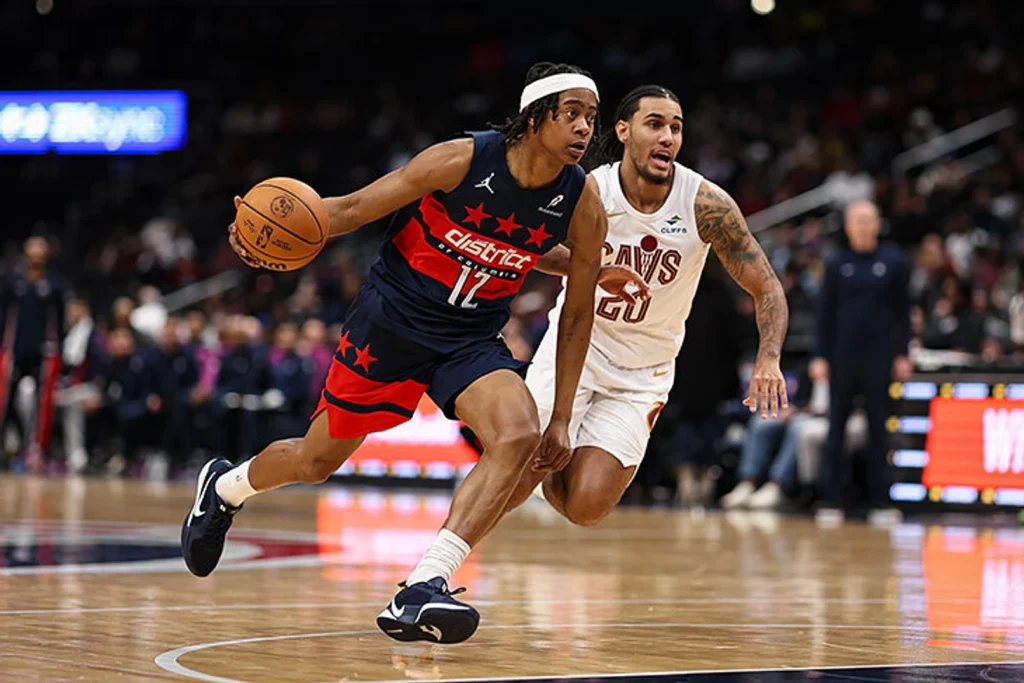
Stats: 12.3 points, 2.9 rebounds, 1.8 assists, 1.6 turnovers in 23.9 minutes
Shooting: 45.5% FG, 39.7% 3PT, 91.7% FT
We debated between him and Caleb Love. The undrafted guard is helping Portland on a two-way contract, earning a legitimate rotation spot. His team’s results are better, but complete instability and terrible shooting splits kept him off the list.
Tre Johnson meets expectations: a versatile sniper with an excellent shot. He’s converting 40% from deep, 51.7% from mid-range, and 71% at the rim. Knocks down catch-and-shoot opportunities, fits into pick-and-rolls, and attacks the basket when given a clear runway. Defense remains more challenging, though advanced stats suggest he’s second among Washington’s regular rotation in On-Off rating—meaning the team loses by less with him on the floor.
The departures of CJ McCollum and Corey Kispert, plus Washington’s intention to delay Trae Young’s debut, will increase playing time. Johnson still hasn’t logged 30 minutes in a game. Can he maintain shooting efficiency with an expanded role? Currently, he almost always plays with reserves. Can he score with the same efficiency against starters?
If Young’s debut must wait, we’ll learn more about Johnson soon. He’ll need to take initiative and additional shots, since Washington’s adequate offensive options would barely suffice for a scrimmage against the 2011/12 Charlotte Bobcats. But that’s precisely the point.
9. Maxime Raynaud, Sacramento Kings (22 years old, C)
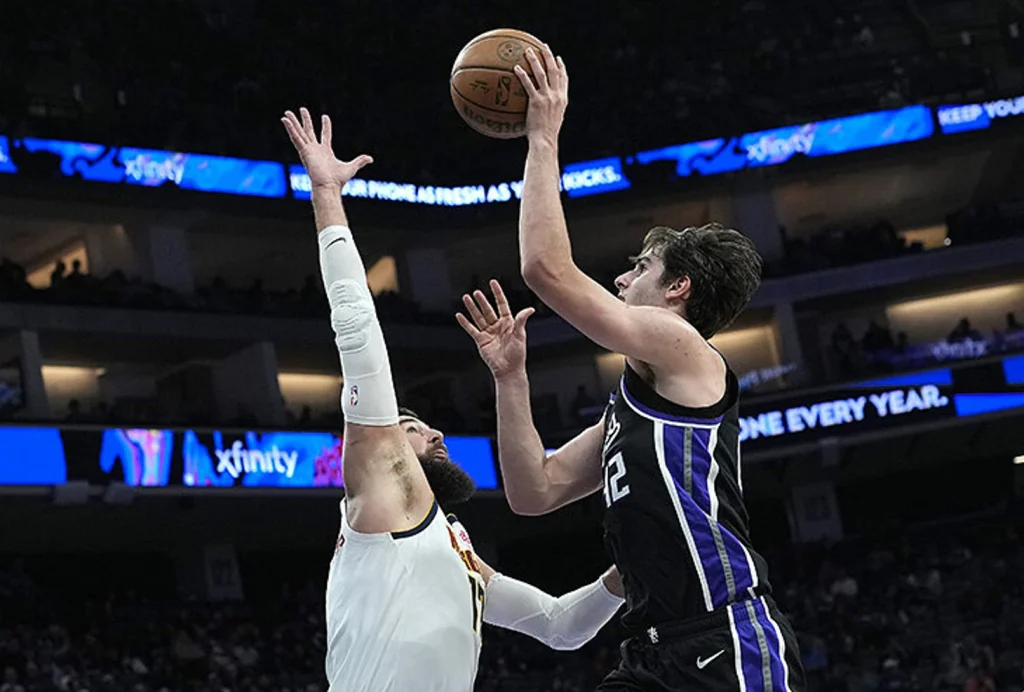
Stats: 10.4 points, 6.5 rebounds, 1.1 assists, 1.0 turnover in 23.4 minutes
Shooting: 55.7% FG, 30.4% 3PT, 71.9% FT
The 7-foot French center went 42nd in the draft. He became the elder statesman after Domantas Sabonis’s injury, moving into the starting lineup with a powerful December: 15.5 points, 9.3 rebounds (3.0 offensive), 1.4 assists; 57.6% FG, 5-of-12 from three.
His task list boils down to setting screens (solid ones) and catching passes. He tosses floaters and hooks from 10-12 feet in the Isaiah Hartenstein mold and possesses a serviceable shot. He lacks the power to attack inside and finish through contact. On the flip side, he feeds on second-chance points and open dunks.
He’s not ready to defend at NBA level. Even nominal wings regularly overpower him. By advanced metrics, he’s below average on current Sacramento—not easy to accomplish. In short, he’s not a revelation but a decent stopgap. Opportunity presented itself, and he’s helping within his capabilities.
Currently, only a couple of elements meet NBA standards. Stepping forward will require either a consistent three-point shot or significant muscle mass gain. Ideally both, of course.
8. Jeremiah Fears, New Orleans Pelicans (19 years old, PG)
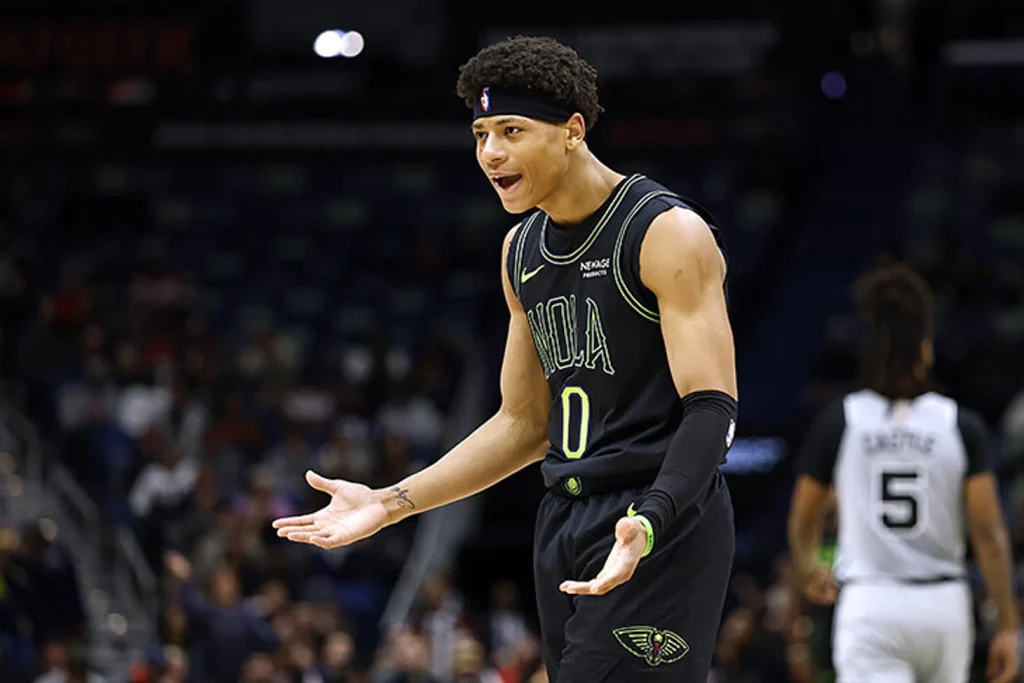
Stats: 14.4 points, 3.6 rebounds, 3.2 assists, 1.3 steals, 2.5 turnovers in 26.7 minutes
Shooting: 43.8% FG, 32.8% 3PT, 78.7% FT
He’s in clear decline. In late December, he failed to reach 10 points in five of eight games despite remaining in the starting lineup with significant minutes. He’s dropped from 16 points per game to 12, shooting around 40% from the field and a terrible 26% from the perimeter. Fortunately, Washington came to the rescue—Fears dropped 21 points on Trae Young’s new team. Perhaps that will restore confidence.
In such cases, people often talk about finding rhythm, but here it’s more about fatigue and difficult circumstances. Rookies built on speed and physicality struggle to maintain the NBA schedule; many hit walls approaching mid-season. Additionally, opponents have adjusted to Fears. They close driving lanes, and his relationship with shooting resembles a ’90s soap opera: they love each other but can’t be together.
The Pelicans often push in transition, but in half-court offense they’re dreadful—28th in three-point attempt rate and 30th in accuracy. The point guard suffers most: defenses collapse, space disappears, every other drive becomes an attempted heroic escape from a crowd. Efficiency drops, points come with difficulty.
Moreover, the ball increasingly finds Dereck Queen’s hands. He has massive potential (and even more chaos), making the shift logical. Fears is unproductive without the ball, though inverted pick-and-rolls with Queen look amusing—a 6’3″ guard setting screens for a 250-pound player and popping for the pass.
It looks more unusual and intriguing than effective. We’re dropping Fears to eighth; without abundant reliable shooters and ball control, he doesn’t impress.
7. Egor Demin, Brooklyn Nets (19 years old, Guard)
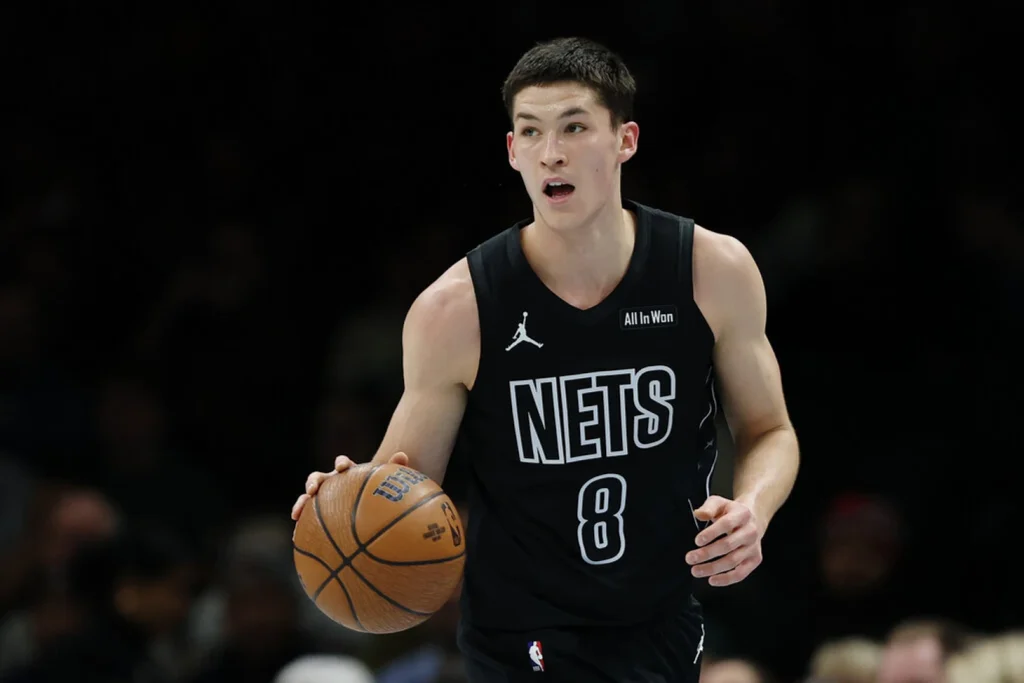
Stats: 10.5 points, 3.5 assists, 3.3 rebounds, 1.0 steal, 1.8 turnovers in 24.7 minutes
Shooting: 39.9% FG, 38.9% 3PT, 84.8% FT
Over two months, he’s become an NBA-level player without qualifications. He’s moving ahead of schedule. Now we need to see how he responds to physical decline and the general slump that’s inevitable with this calendar. Here’s the trap: Egor never has more than one weak game in a row. That’s serious.
He constantly finds ways to turn situations around, suggesting both character and intelligence. For example, the Orlando game was one of his worst in recent weeks for a long time. The coaching staff entrusted him with the ball, allowing him to initiate offense and direct possessions. Not much was working, right?
Then the magical closing minutes arrived, shots started falling, bells rang louder. Paolo Banchero’s incredible bank shot denied him his first career game-winner. Maybe that’s for the best—we’re not writing fairy tales here, but something more serious.
Why did Demin get the ball in such proportions against the Magic? First, he earned it. Tarrence Mann and Tyrese Martin’s absences are weak excuses. Previously, nothing stopped Jordi Fernández from giving possessions to Cam Thomas, Michael Porter, or even Nic Claxton and Danny Wolff. Simply put, Egor matured.
Second, it was time for a checkpoint. Orlando defends aggressively on the ball, throws traps, and suffocates even without Jalen Suggs. If you’re conducting a test, do it in combat conditions. He has 2.5 months in the league behind him, with dribbling and athleticism work clearly underway. They measured progress and understood how far he’s advanced. Much work remains; he’s not ready to be the primary ball-handler. Development continues with expanded pick-and-roll arsenal: 45-degree angles, involving the third man, dribble handoffs. We’ll return to this conversation later.
Why so high? He’s a full participant in the team’s serious surge, influencing results. Brooklyn played the best defense in the NBA during December, posting seven wins in ten games. Demin no longer appears in garbage time; now he’s perceived as an adult.
Justified confidence and a series of important clutch shots bring respect. Early in the season, Nic Claxton and Michael Porter primarily looked for each other with passes, involving others only when no alternatives existed. Now Demin regularly receives the ball even when he’s not the only option. Moreover, passes increasingly go to him even when someone else is in a better position. Simply put, they trust him—not just coaches but leaders. Earning that trust is perhaps even harder.
In nine of his last ten games, he’s scored 10+ points, breaking 20 twice. Second among rookies in made threes (77), record-holder for three-pointers made through 30 games by any Nets rookie in franchise history. He’s shooting 42.7% from the perimeter over his last 15 games.
Notice: offensive productivity increased after defensive progress. In early weeks, he was learning the court, occupying basic position, trying not to make mistakes. Gradually, he learned to act from a position of strength: reading passing lanes, moving actively and switching, directing teammates, bringing aggression. He doesn’t restrain himself and gradually deploys his hands—quick and sticky. He’ll poke the ball loose on drives, intercept passes, reach on help defense to contest rim attackers.
He still lacks physicality, often getting displaced by more powerful players. But his head, understanding of the game, and confidence work wonders. The main impression of Demin before the cascade of important makes in recent weeks—how much more present he’s become on defense! Confidence on his own half adds courage on the opponent’s end.
He’s gradually mastering drives, finally getting to the free-throw line, and last night even tried to dunk over Brook Lopez. He’s converting 54.8% at the rim—certainly weak. However, Cade Cunningham shot 58.8% in his first season and 56.1% in his second.
Why mention Cunningham? That’s who Egor primarily models himself after. If this continues, by season’s end the numbers will improve. For Brooklyn, what happens now isn’t critical. Progress matters far more. Demin has it in all directions. Smart, teachable, with character. Seems they didn’t miss with the eighth pick.
When awards are distributed, our elephant won’t be left out. At this pace, All-Rookie Second Team is inevitable, and Cam Thomas will be playing for scraps next season.
6. Dereck Queen, New Orleans Pelicans (21 years old, C)
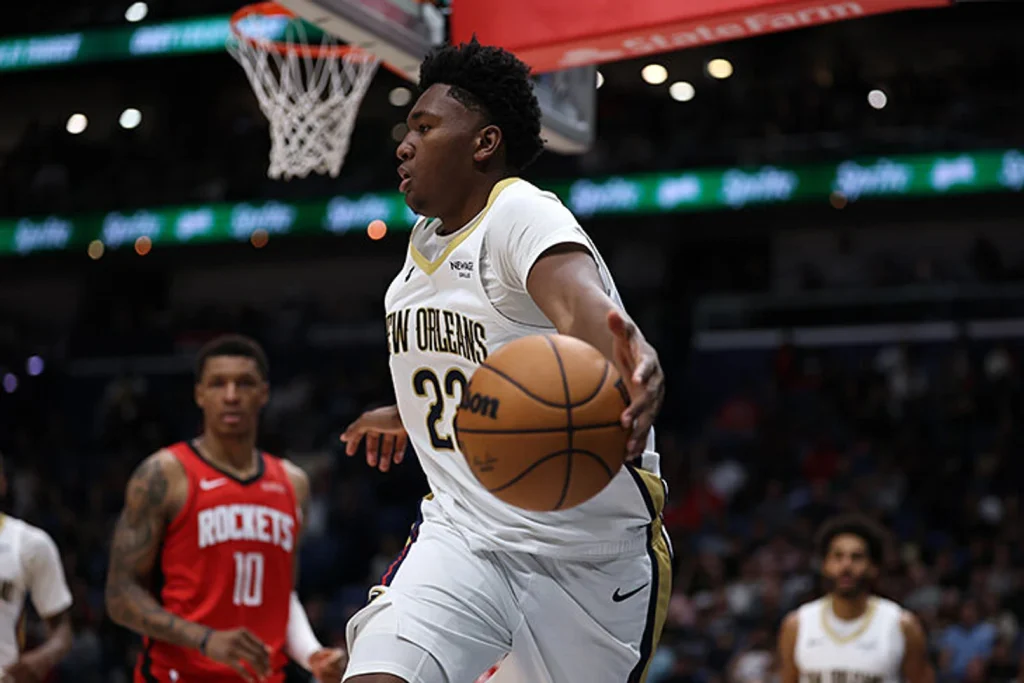
Stats: 12.9 points, 7.5 rebounds, 4.3 assists, 1.1 steals, 1.0 block, 2.5 turnovers in 26.1 minutes
Shooting: 49.6% FG, 17.9% 3PT, 77.4% FT
At his best, you completely forget he’s actually a 250-pound center. He spends significant time with the ball; the combination of size and power opens doors typically closed to smaller players. Of course, with 1,000 NBA minutes, he doesn’t squeeze through every opening. Sometimes he runs headlong into a doorframe. Painful but understandable. Still too early.
He still seems to flip a coin when determining his next action. Throws alley-oops from half-court, runs inverted pick-and-rolls, performs drunk ball-handler repertoire, launches difficult mid-range shots, and keeps testing himself from beyond the arc. No awakening has occurred: five straight games with inevitable misses. Impatient on defense: bites on fakes, fouls.
We’re ranking him relatively low due to weak shooting efficiency and terrible team results. It’s a matter of taste: he arguably deserves fourth or fifth place. Pre-draft, the most enthusiastic journalists compared him to Alperen Şengün and even Nikola Jokić with athleticism. In his best moments, that’s accurate. The thing is, these aren’t minutes or even seconds, but rather flashes. We don’t think condescendingly about seconds, but we acknowledge them. Currently, he sees and feels much but understands little.
It’s easy to see why the Pelicans fell for Dereck and chose to mortgage their future. If he adds power, improves his shot, and connects decision-making to what’s happening on the court, he’ll become extremely difficult to contain. However, you know the key word in that previous sentence.
If.
5. Cédric Coward, Memphis Grizzlies (22 years old, SF/PF)
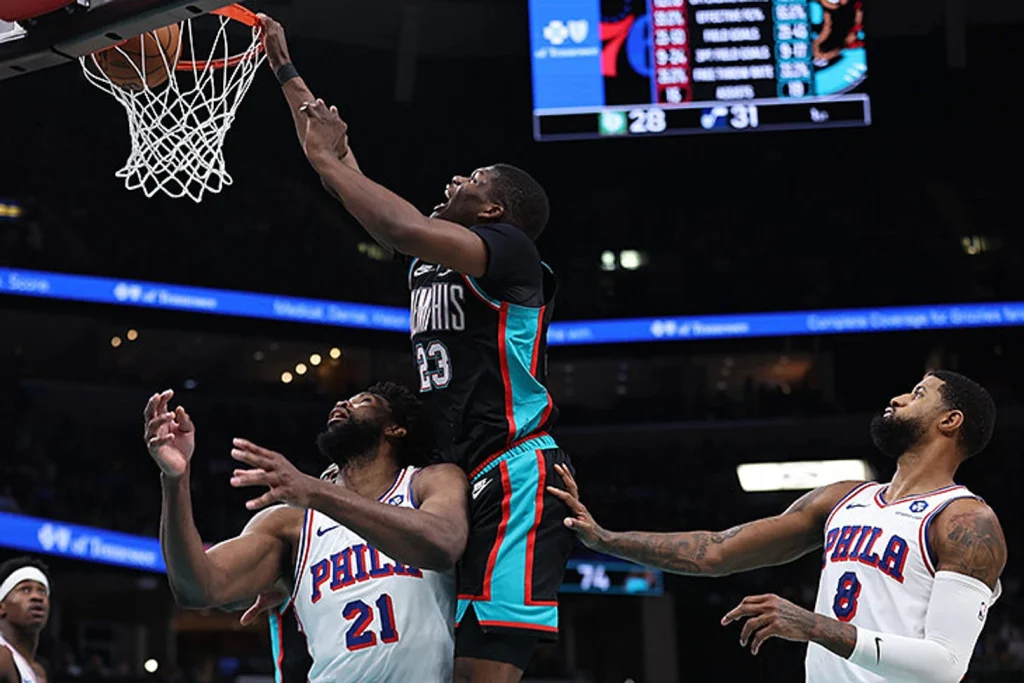
Stats: 13.7 points, 6.6 rebounds, 3.0 assists, 1.7 turnovers in 26.7 minutes
Shooting: 46.7% FG, 32.9% 3PT, 84.6% FT
After a strong start, he can’t tame the long-range shot. Otherwise, he’s an important jack-of-all-trades for a hardworking team. He rebounds significantly more than Jaren Jackson Jr., trailing only him and Ja Morant in scoring. Facilitates ball movement, active defensively, often guards much more powerful and taller opponents.
Two things still concern us: embarrassingly weak 24% from the corners and a rare disparity between home and road games.
Home: 16.1 points, 7.6 rebounds, 3.4 assists, 0.9 steals in 27 minutes; 52.2% FG, 41.3% 3PT
Road: 11.5 points, 5.7 rebounds, 2.6 assists, 0.3 steals in 26 minutes; 41.3% FG, 23.6% 3PT
He’s emotionally dependent, constantly diving into the action and feeding off surrounding energy. The conclusion depends on perspective: for a first season, perhaps normal; for 22 years old, not great. He makes smart decisions, increasingly receives help-defense assignments, attacks the boards aggressively. He’s versatile, useful in small ways—but doesn’t provide the main thing.
Cédric entered the league late; Memphis drafted him specifically as a reliable, stable Desmond Bane replacement. Someone with those functions should exude confidence and inevitability, which hasn’t materialized yet. That’s why he’s only fifth.
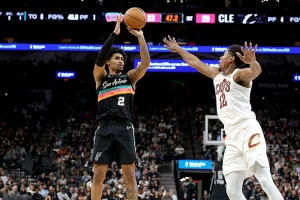
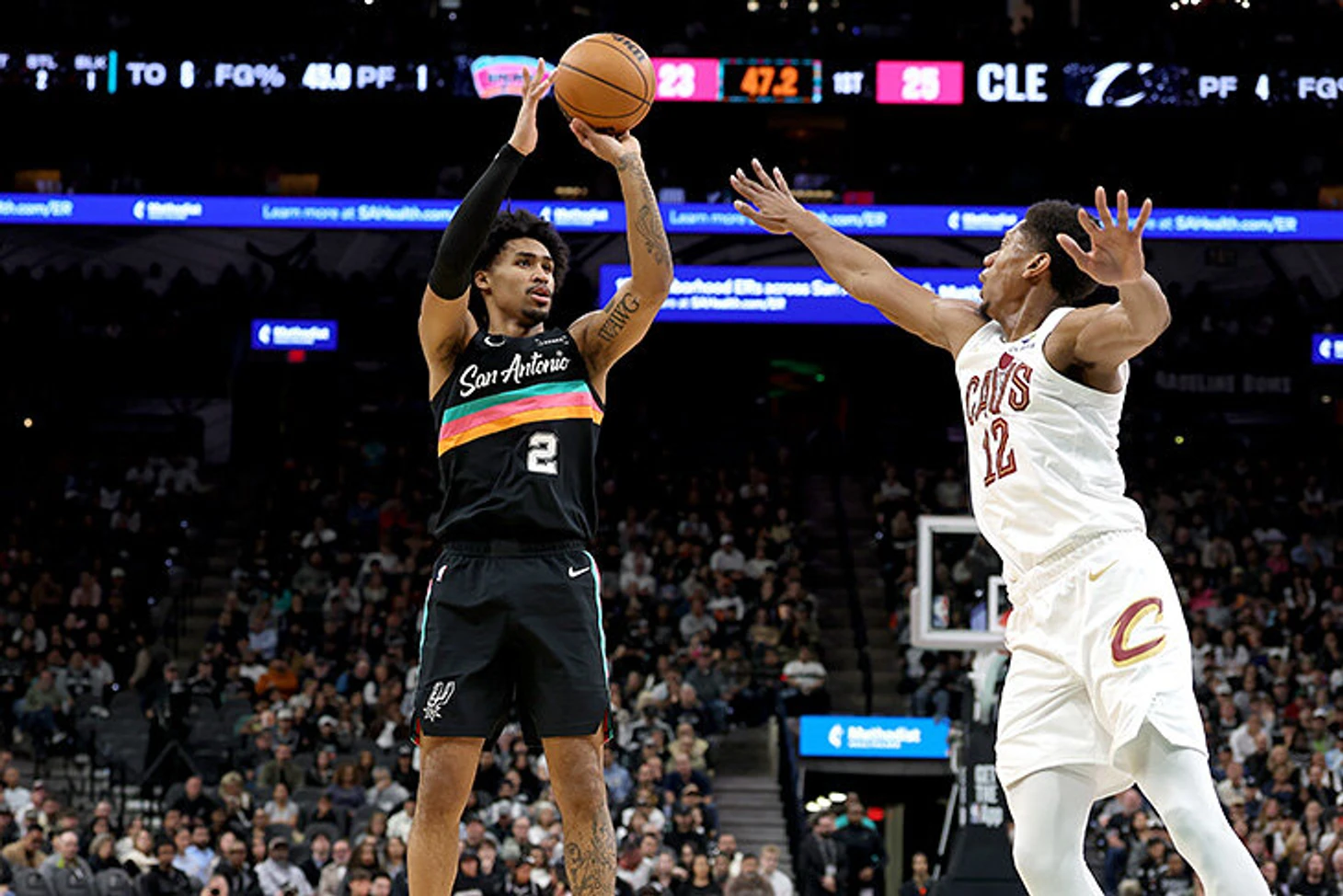
4. Dylan Harper, San Antonio Spurs (19 years old, SG)
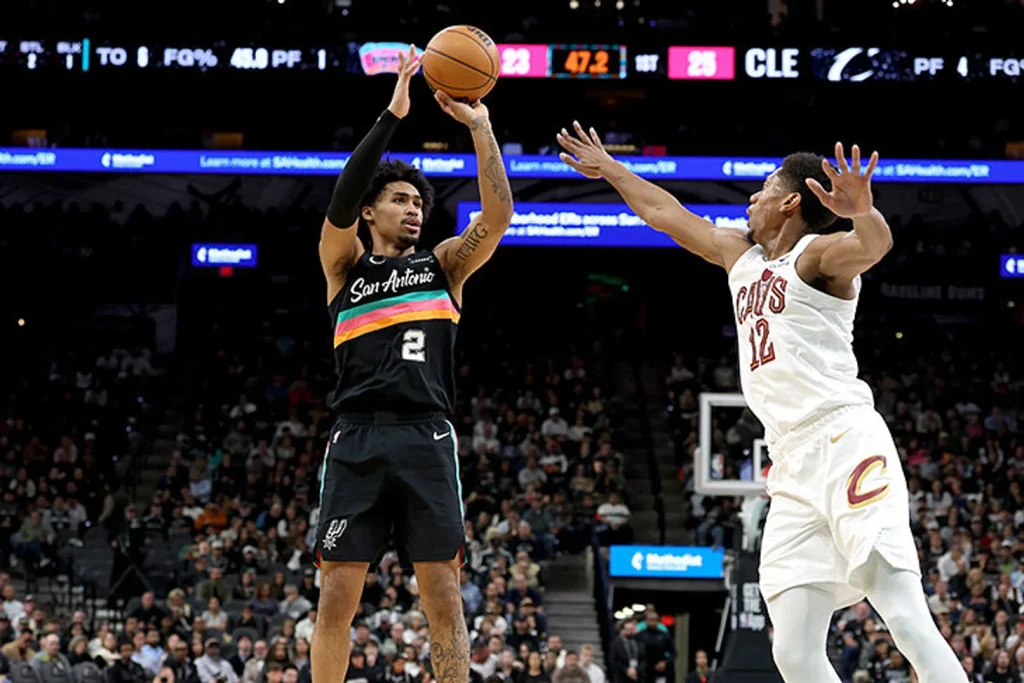
Stats: 11.0 points, 3.7 assists, 3.2 rebounds, 1.1 steals, 1.5 turnovers in 21.4 minutes
Shooting: 43.7% FG, 25.0% 3PT, 72.1% FT
Only eighth in scoring average and missed about ten games. Why so high?
There are reasons to drop him a couple spots. Lowest playing time among rankings participants, only one without starting appearances. But he plays for a strong club and makes real contributions to success. That’s more important than scoring three or four extra points at the bottom of the standings. Just 21 minutes per night, but honest, competitive 21 minutes.
Harper has an extremely unstable shot, balanced by clear understanding of what’s required. He takes 62.3% of his shots from the restricted area, trailing only Tre Jones of Chicago in this metric. He slithers to the rim, finishes with both hands, already handles the ball confidently, and creates quality opportunities for teammates. Dribble turnovers and naive passes are unusually rare for 19 years old.
Excellent advanced statistics are based primarily on defense. San Antonio needs quality, energetic perimeter defense. Recently we praised Stephon Castle extensively; Harper deserves equally warm words. It’s not about athleticism, though he has no problems there. He reads the game alertly, possesses quick, sticky hands. Rarely gets stuck on screens. Extremely difficult to shake from your back.
The coaching staff is developing him intelligently. Due to shooting issues and a crowded backcourt, Mitch Johnson brings Dylan off the bench. He mainly plays at quarter turns—against reserves. The Spurs often generate runs there; the flying squad emerges from ambush and wreaks havoc.
He’s not ready for the big stage due to obvious vulnerability but has already become an integral, positive part of the Western Conference’s second-best team. Too early for top 3, but we rank him above the rest: his contribution isn’t massive, but it’s government-insured. In other words, he helps win, not tank the season.
3. VJ Edgecombe, Philadelphia 76ers (20 years old, SG)
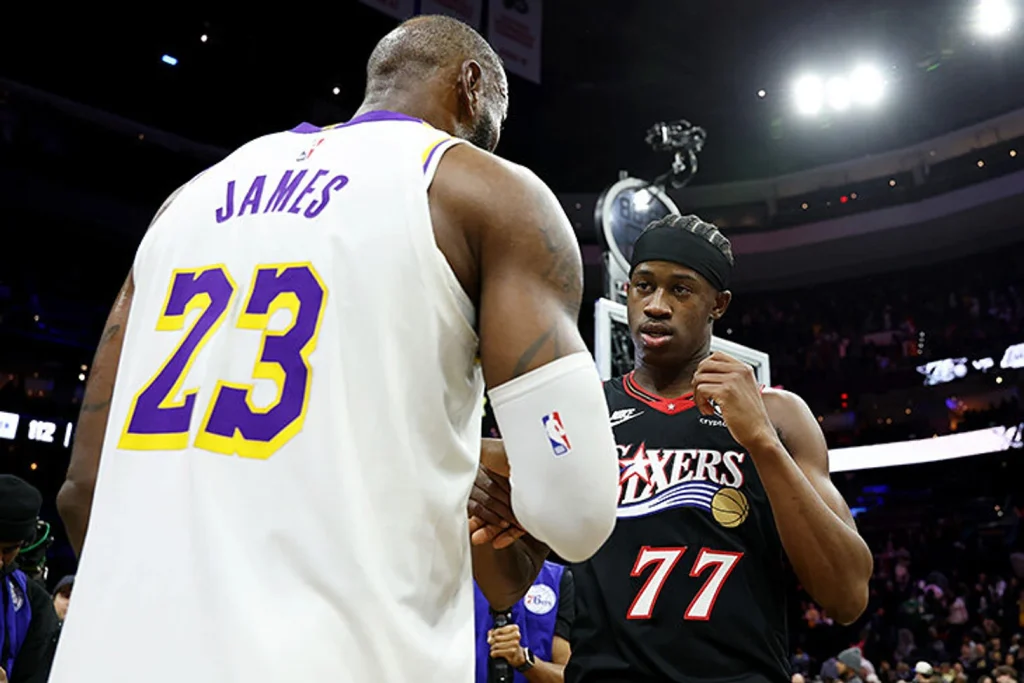
Stats: 16.1 points, 5.5 rebounds, 4.3 assists, 1.6 steals, 1.7 turnovers in 35.9 minutes
Shooting: 42.8% FG, 37.4% 3PT, 78.7% FT
Leader among rookies in playing time and steals, second in assists, third in scoring. Sixth place in the NBA for average playing time in a debut season seems excessive. However, we’ve already discussed Nick Nurse’s methods.
Naturally, under such conditions, Edgecombe rides a roller coaster: rapid ascent, sharp plunge. Strength depletes, and his game relies heavily on energy. The intensity gap between the NBA schedule and college basketball is colossal; add constant flights and minimal practice time. Declines are inevitable, but here’s the key: he copes.
He switches between modes quite well, ensuring productivity in any scenario. Handles the ball and initiates offense, spaces the floor and attacks off catches, guards the opponent’s leader. This ability to transition between roles is especially important for Philadelphia given Joel Embiid and Paul George’s flexible attendance schedules.
One day, Edgecombe must provide 20+ and create; another day, he stands at 45 degrees and doesn’t interfere with veteran performers on massive contracts doing their thing. One constant remains: any day he’ll energize, dive on the floor for loose balls, and grab important offensive rebounds.
On drives, his legs often outpace his head, desire overwhelming common sense. He’ll attack into block attempts or run into two defenders. Otherwise, everything’s in perfect order. His ability to overcome bad days rather than sink into despair impresses. He can miss everything early, then knock down several key, difficult clutch shots consecutively.
2. Kon Knippel, Charlotte Hornets (20 years old, SG/SF)
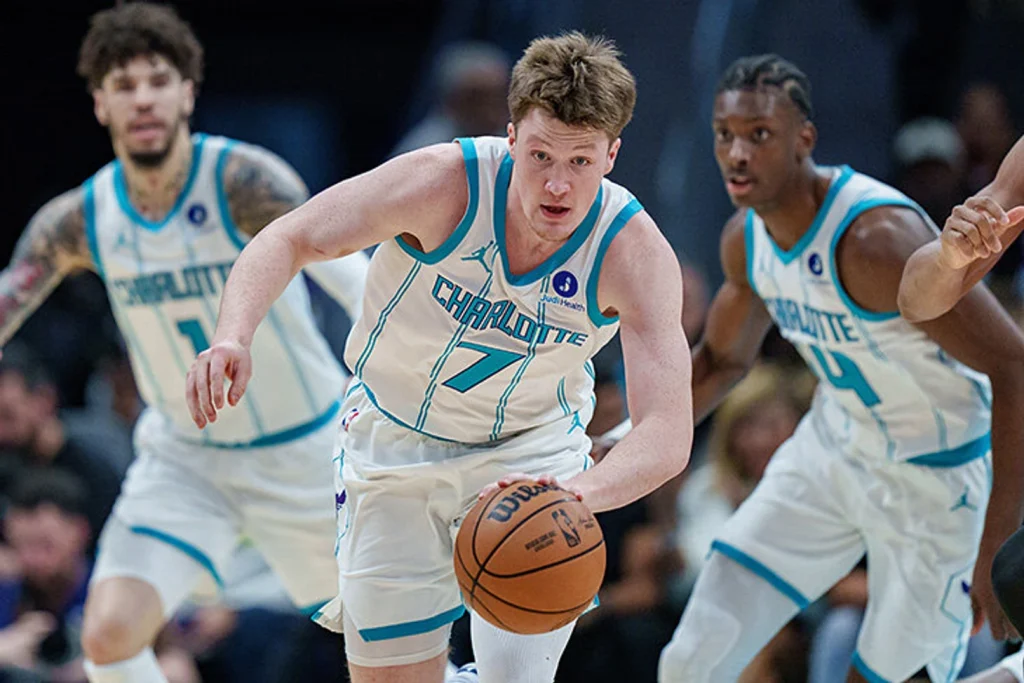
Stats: 19.3 points, 5.2 rebounds, 3.5 assists, 2.4 turnovers in 32.9 minutes
Shooting: 47.3% FG, 42.7% 3PT, 88.6% FT
He still deserves the top ranking. If we wanted. Rookies with this shooting confidence at these volumes haven’t appeared in the NBA for years. Fastest in history to hit his first 100 threes—managing it in 29 games. The previous record holder (Lauri Markkanen in 2017/18) needed 41 games.
If he avoids injuries, he’ll comfortably set a new rookie three-point record. Keegan Murray made 206; Knippel already has 132. At his current pace, he’ll break 300.
What does 19.3 points at 42.7% from the perimeter mean? Well, no NBA player has ever averaged 19+ points with 40+% from three in their rookie season. Technically, Larry Bird achieved it, though the three-pointer had just entered the league. In 1979/80, the Hick from French Lick made 58 of 143 attempts (40.6%).
So Kon’s shooting is historically unique, and crucially, he’s far more versatile and dangerous than a typical white sniper. Numerous ways to fool defenders and create advantageous attacking opportunities, solid 67.5% at the rim, expanding offensive role.
That last factor is perhaps undervalued. Knippel’s assists by month: 1.8 – 3.3 – 4.7. It’s not workload increasing but understanding level, NBA adaptation, and defensive manipulation. Look at turnovers by month: 2.4 – 2.3 – 2.5.
He’s carrying a load he can handle. Doesn’t dribble for 15 seconds, doesn’t over-create. But he sees strong moves immediately. Currently limited to pick-and-roll plays and elementary actions. Trapping Knippel is now dangerous: deadly shooting has been joined by timely passes creating advantages for teammates.
Defensively, he’s negative, though for Charlotte’s current state that’s actually a plus. Among pleasant bonuses: minimal mid-range attempts. Finding a rookie with a strong shot and willingness to avoid inefficient attempts is harder than it seems.
Kon fits perfectly into head coach Charles Lee’s trends: where others would fire from 15-18 feet, he attacks the rim and finds opportunities for constructive passes. Quality trait.
1. Cooper Flagg, Dallas Mavericks (19 years old, F)
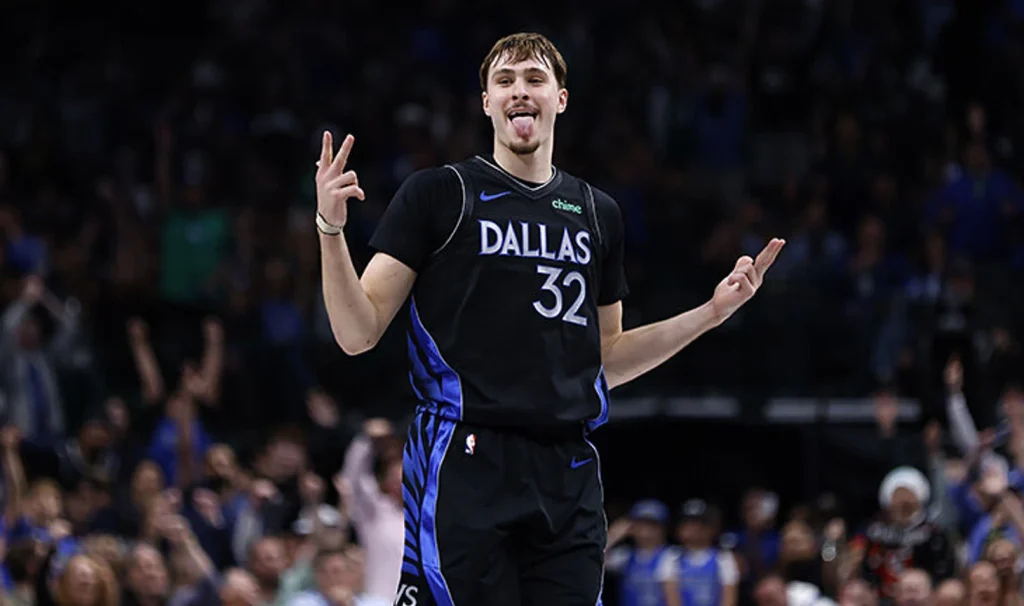
Stats: 19.1 points, 6.6 rebounds, 4.3 assists, 1.3 steals, 2.2 turnovers in 34.7 minutes
Shooting: 48.0% FG, 28.7% 3PT, 81.4% FT
He’s enjoying the opportunity to be himself, taking small steps forward. He plays the three or four, often flanked by two traditional guards. Receives the ball in motion, solves possessions. He doesn’t exploit one strong quality but week after week discovers new scoring avenues—from cutting inside with confident finishing to independently creating his shot.
Converting 76% at the rim—elite level. Give him momentum and punishment follows. He seeks contact even when unnecessary. He beats bulkier defenders with speed, smaller ones with power. Uses his vertical at an elite level: provokes opponents’ jumps, hangs an extra second, waits for them to descend. Then finishes.
He’s developing a mid-range game. Shooting 52.5% from 10-16 feet—already among the NBA’s best. Two methods: catching from bigs followed by a screen, and after isolation. Rocks the defender, creates distance, elevates. He releases at a high point, which at his height and vertical reliably protects against blocks.
The three-pointer is gradually emerging. In October and November, he made about a quarter of attempts; in December, respectable 33.3%; in January, he’s maintaining that level.
He’s developing as a passer. Early season, he was limited to 3-5 assists despite nominally playing point. Now he consistently dishes 7-8, flirting with triple-doubles twice: 33+9+9 against Denver and 26+10+8 against Utah. The wedding night hasn’t arrived yet.
It’s not about position but workload. He didn’t pass the point guard crash course. With gradual workload increases, productivity is encouraging. He doesn’t overthink, patiently prepares elementary solutions—harder and more important, at least at 19.
He reads defense, swings the ball to the weak side, activates perimeter snipers. Additionally, he finds Anthony Davis brilliantly; AD has always had pick-and-roll predisposition. AD combines mid-range threat with ability to dive sharply to the rim, and Cooper feels the passing moment excellently.
Traditional health problems prevent the partnership from fully blossoming but give Dallas management confidence for the future. Give Flagg a big man for two-man game with a polished mid-range and enjoy. Such a duo will draw additional defenders, ensuring open shots. Try avoiding traps and they’ll crush you with power and athleticism.
He’s improving defensively. He calculates passing trajectories and hunts steals, smoothly switches between modes: rim protection, guarding opponents’ top players, help defense. The combination of size, athleticism, and intelligence makes him a significant obstacle whether against guards or traditional centers. He directs, guides, lives in the game’s heart.
Among the league’s best in clutch scoring. He’s tracking ahead of the rookie clutch scoring record pace, currently held by Brandon Jennings.
Confident, consistent, reliable. Even on openly bad days, he provides 10-15 points with 6-7 rebounds and assists. Some players are versatile; Cooper is comprehensive. As of January 10, he leads Dallas in total points (708), rebounds (243), assists (159), and steals (47). Can you guess the previous rookie who led his team in these four categories?
Michael Jordan, Chicago 1984/85. Forty years ago.
Help from Kyrie Irving apparently won’t arrive, and Anthony Davis exists in two states for years: sitting on suitcases or lying in hospital beds. Dallas’s season will be scrambled at best, but daily there’s less doubt about the main question’s answer: yes, Flagg is the one.
Rankings based on games played through January 2026. Players must have missed no more than 10 games to qualify. Previous rankings from December 2025