With nearly half the regular season behind us, it’s time to talk about the letdowns—specifically, established stars (or near-stars) on serious contracts who have not met the expectations attached to their status. This is a symbolic “Starting Five” of disappointment, built on performance, role, and team context—not on long-term injuries or cases where expectations were fully met.
Why These Names Made the List
This list is intentionally narrow. It focuses on players with star or near-star standing and meaningful contractual responsibility. It excludes those whose seasons were derailed by major injuries, and it excludes players who are simply doing what was reasonably expected of them.
That approach is why you won’t see certain names here, but you will see Ja Morant: many anticipated another difficult chapter, yet the drop-off has been faster and deeper than expected.
Evan Mobley, Cleveland Cavaliers (PF/C)
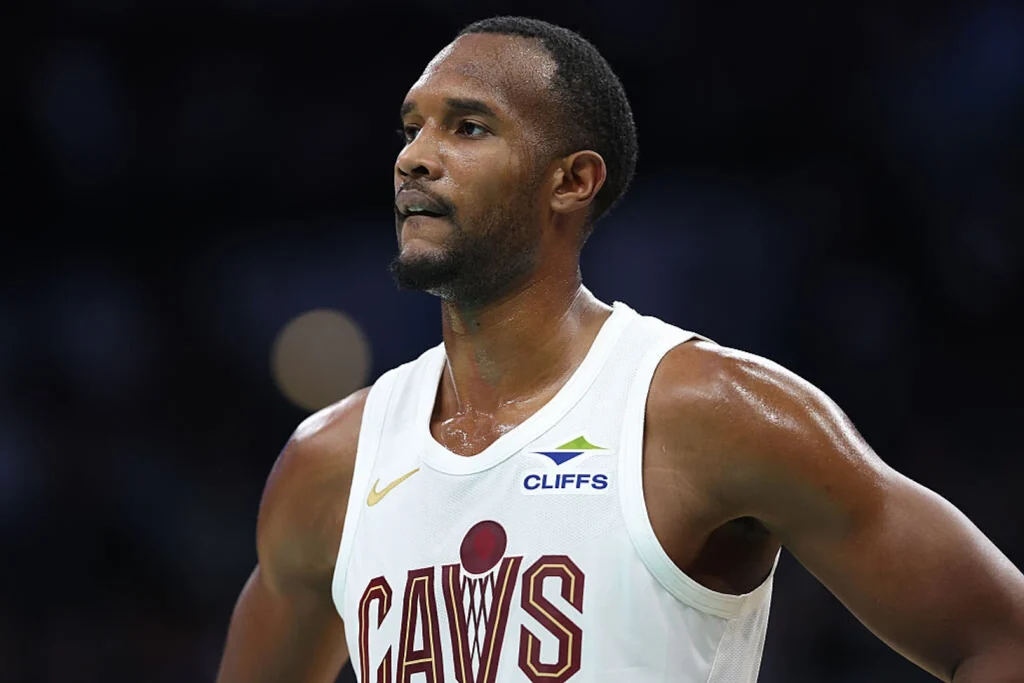
17.9 points + 8.6 rebounds + 4.1 assists + 1.8 blocks + 1.0 steal + 2.1 turnovers in 33.2 minutes; 51.3% FG – 32.8% 3PT – 64.2% FT
Cleveland’s previous season ended at a high point and turned into a harsh hangover. The supporting infrastructure shifted, and the year began with injury-related constraints in the backcourt. A step back was predictable. The scale of the offensive regression was not.
Mobley entered the season carrying major “next leap” expectations. The logic was straightforward: more responsibility, more touches, more shots, and more chances to expand his scoring profile—especially while the team dealt with health issues elsewhere. The framing was clear: his offensive growth would stabilize Cleveland while others recovered and, longer term, set the foundation for a higher ceiling.
Nearly three months in, the core concern is not merely efficiency—it’s the absence of meaningful forward motion as a self-sustaining offensive option.
More Involvement, Same Problem
On paper, Mobley’s workload is heavier:
- He is getting the ball more frequently.
- His minutes are up.
- His shot volume is at a career high.
But the eye test clashes with the workload metrics. The recurring pattern is difficult to ignore: a 211 cm, powerful, athletic player routinely receives the ball in advantageous matchups and does not consistently pressure the defense with force.
Instead of punishing smaller defenders, he often drifts into:
- extra dribbles without leverage,
- quick kick-outs,
- mid-range attempts,
- any decision that avoids contact and pressure at the rim.
That is not an indictment of skill—Mobley is talented and intelligent. It is a critique of offensive intent. If the team needs him to be a second pillar (or, at times, the first), he has not consistently behaved like one.
The Shot Profile Is Moving in the Wrong Direction
The most alarming marker is how his attempts have shifted away from the most valuable real estate.
- Share of shots at the rim (last three seasons): 46.4% → 42.1% → 35.6%
- Share of shots from 1–3 meters (same span): 33.7% → 27.0% → 24.2%
Meanwhile, mid-range volume has spiked versus last season—without the payoff. The cited accuracy level (around 35%) translates to a low return per possession, and it’s difficult to build a top offense around that diet, especially from a player with Mobley’s physical tools.
Mobley’s free-throw pressure remains modest (around five attempts per game), and his free-throw accuracy has fallen to 64.2%, which further limits the value of any incremental rim pressure he does generate.
The Biggest Letdown: Independence Without Mitchell
Mobley remains an elite defensive presence and justifies his reputation on that end. The disappointment is that, even in Year 5, he has not made the leap into a reliable “create something when the structure breaks” option—particularly in lineups missing Donovan Mitchell.
That gap matters because Cleveland’s context demands more than a polished complementary piece. Injuries, instability, and a less synchronized environment create exactly the kind of season where a true star expands into the vacuum. Mobley has not.
Paolo Banchero, Orlando Magic (F)
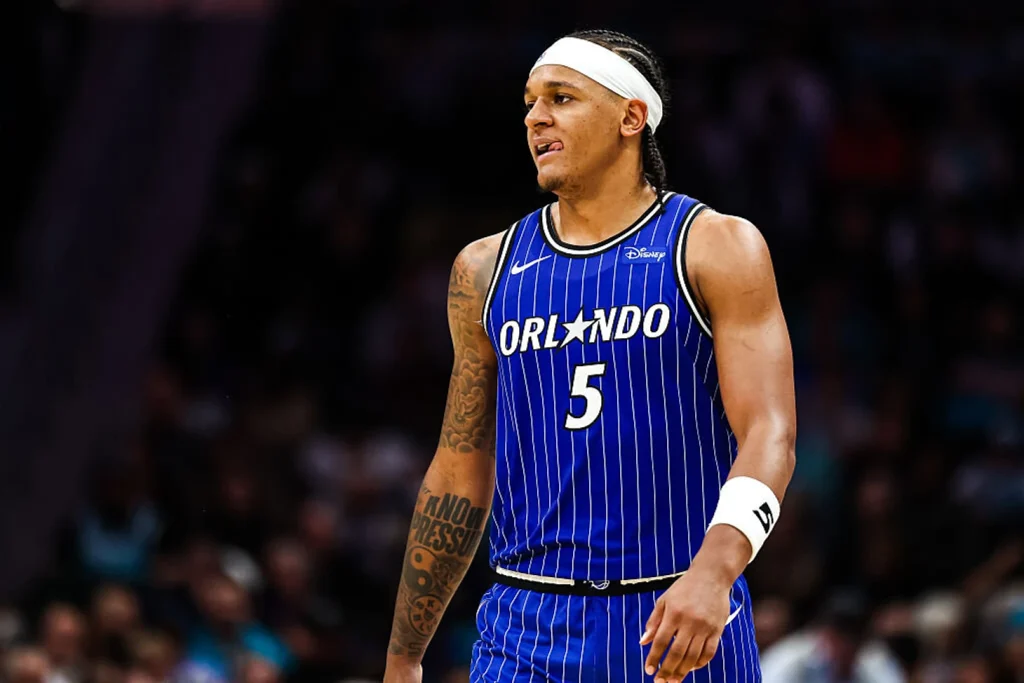
20.9 points + 8.7 rebounds + 4.9 assists + 2.9 turnovers in 33.7 minutes; 45.3% FG – 25.2% 3PT – 75.5% FT
Banchero is the mirror image of Mobley in one critical sense: no one can question aggression. The problem is that “aggression without balance” can become its own form of drag.
Orlando’s ambition level has risen, and the organization is not behaving like a team satisfied with hovering near the play-in line. In that context, the question isn’t whether Paolo can take over stretches—it’s whether his style is translating into efficient, winning basketball over a long sample.
The Team Tries to Shape Him—Results Haven’t Followed
The coaching staff has clearly tried to refine the profile:
- Offensive load is down sharply (usage reduced versus last year).
- Average shot distance is at a career low.
- Three-point attempts are down to 3.6 per game (from roughly six the prior season).
- The share of mid-range attempts from around six meters is also at a career low.
In theory, that’s a sensible reallocation—fewer difficult jumpers, more rim pressure, better shot quality.
In practice, the results have been bleak. The key performance indicator highlighted here—halfcourt shot-making adjusted for shot difficulty—places Banchero near the bottom among high-minute players (500+ minutes threshold). That is not simply “cold shooting”; it’s a warning sign that the current mix of decisions and outcomes is failing to scale.
The Orlando Problem: Directional Misalignment
Orlando has other productive pieces and more than one viable source of points. Which only raises the tension: if the supposed centerpiece cannot find an efficient equilibrium, the team’s overall balance becomes hard to sustain.
The fear embedded in this season is not “Paolo is bad.” It’s “Paolo is pulling one way while the rest of the roster and the organization are trying to pull another.”
At some point, if the gap persists, the conversation changes from “How do we optimize him?” to “Can this configuration work at all?”
Ja Morant, Memphis Grizzlies (PG)
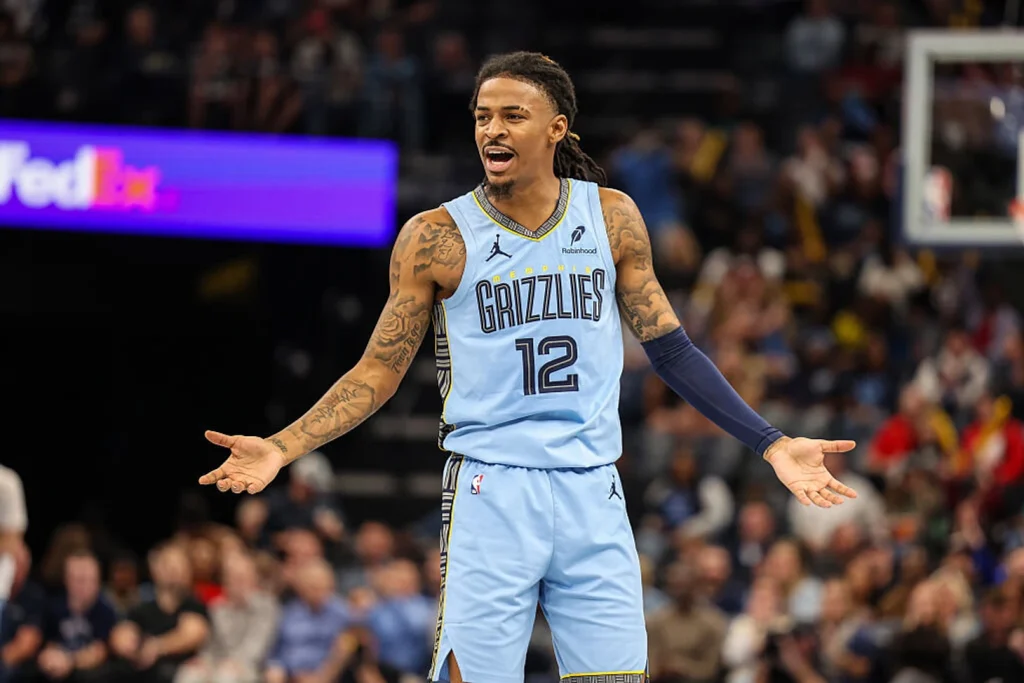
19.0 points + 7.6 assists + 3.2 rebounds + 1.0 steal + 3.6 turnovers in 28.3 minutes; 40.1% FG – 20.8% 3PT – 90.0% FT
Morant was already a concern earlier in the season. The only surprise is how quickly the concerns crystallized into a full-scale performance problem.
In the modern NBA, two traits are increasingly non-negotiable for a lead guard with a max contract:
- the ability to survive without the ball, and
- a baseline level of reliable shooting.
Morant is currently failing both tests, and the league’s stylistic evolution has made those failures louder.
Efficiency Collapse—and the On/Off Alarm
Among high scorers (15+ points per game), Morant grades as the worst in true shooting, sitting dramatically below league average. That isn’t a minor dip—it’s a structural issue.
The team-level splits are even more damaging:
- Offensive rating with Morant on the floor: 103.6 per 100 possessions
- Offensive rating with Morant off the floor: 114.3
For context in your text: even the league’s weakest offenses are above 109. Memphis is functioning like a broken attack when he plays—and a respectable one when he sits.
That is the definition of “disappointment” for a player on a fully guaranteed max through 2028 (noted total value: over $126 million). It’s not merely that he’s underperforming; it’s that his minutes appear to be actively harmful to the team’s basic identity.
The Contract, the Market, and the Harsh Reality
The text frames Memphis as hoping to trade Morant at a price that reflects his past reputation—something like a first-round pick. The problem is that the current version requires a buyer to do more than “take a swing.”
A buyer has to believe:
- that this is sabotage or temporary dysfunction,
- that a change of scenery flips the switch,
- and that enough of the old Morant can be recovered to justify the financial weight.
At this point, the league isn’t just skeptical. It’s moving from skepticism to disbelief.
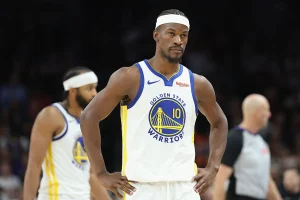
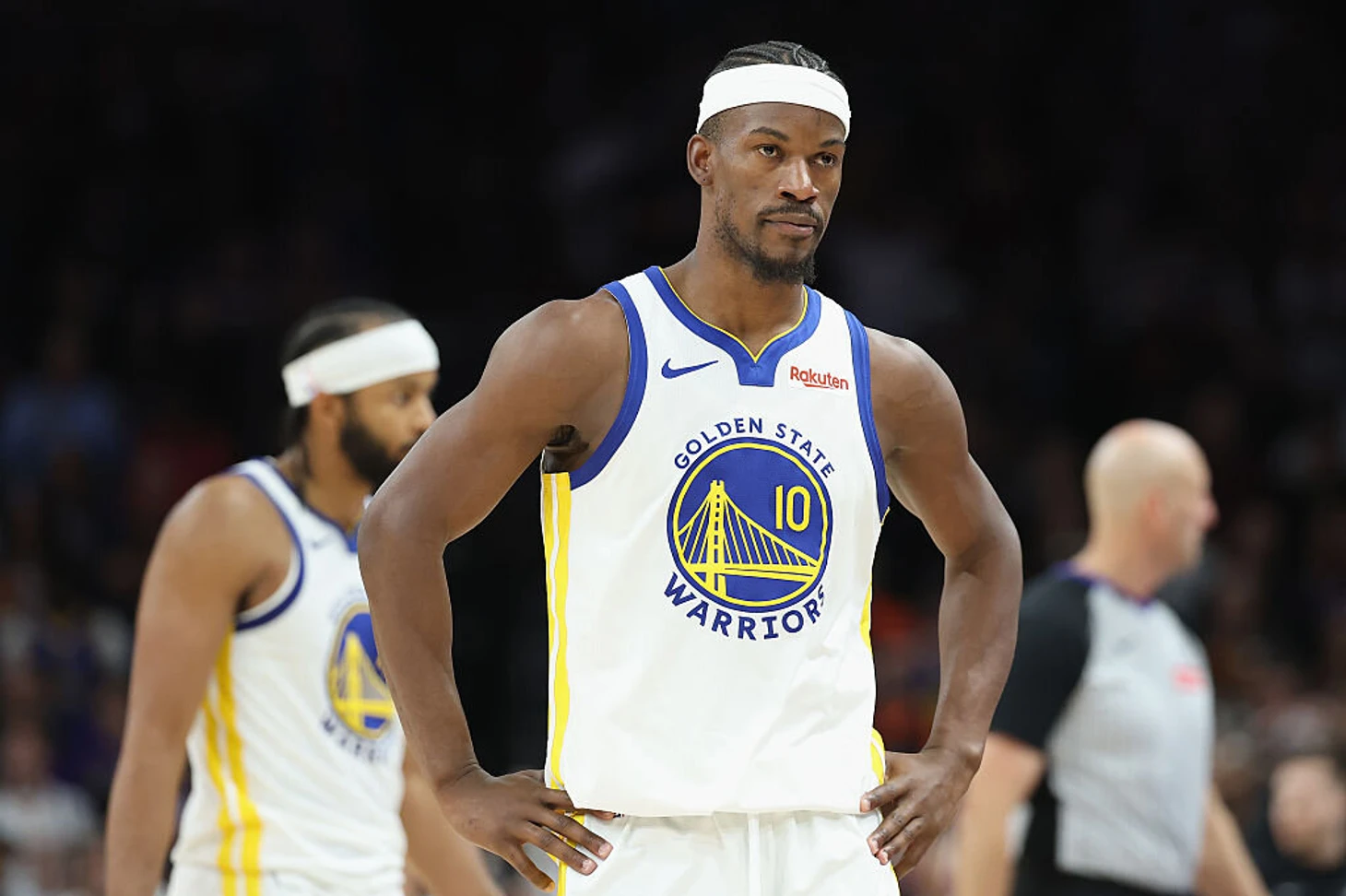
Jimmy Butler, Golden State Warriors (F/SG)
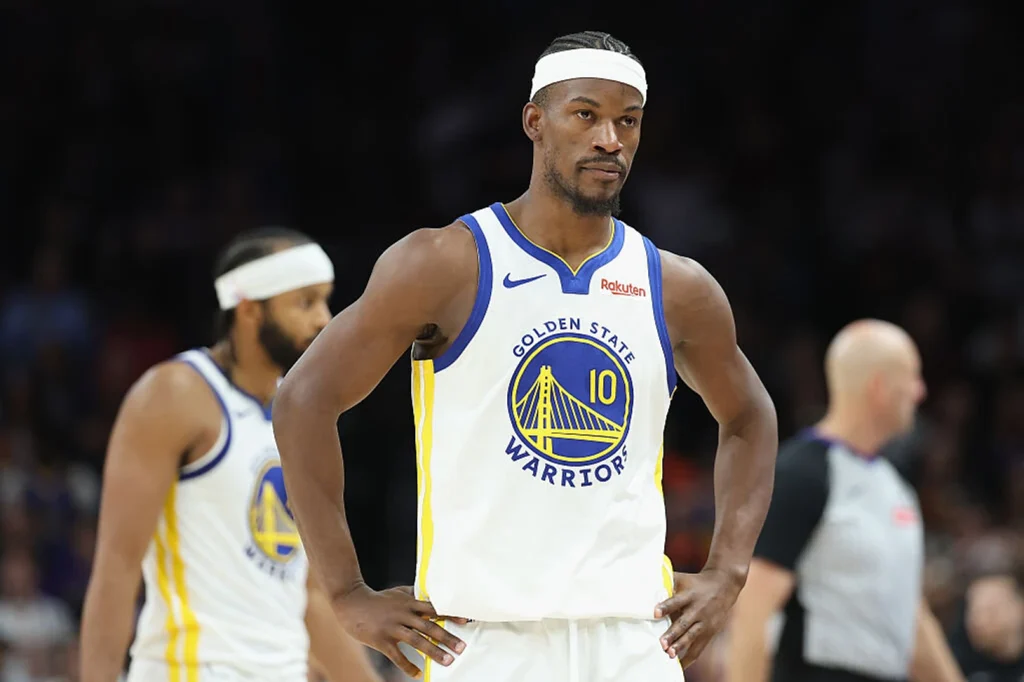
19.8 points + 5.6 rebounds + 4.9 assists + 1.4 steals + 1.6 turnovers in 31.4 minutes; 51.3% FG – 38.3% 3PT – 86.6% FT
Butler is the “different kind” of disappointment on this list: the numbers are better than the feeling.
He’s still producing efficiently, still creating advantages, still drawing fouls at an elite rate (7.8 free-throw attempts per game, with a top-of-league free-throw-to-shot ratio). Advanced metrics reportedly love his impact, and the turnover rate is low for his responsibility.
So why is he here?
Because Golden State didn’t need a strong third option. It needed a second star—at times, even a first.
The Issue Isn’t Butler’s Output. It’s the Role Requirement.
Butler has historically paced himself through regular seasons, saving the loudest version for playoff basketball. In Golden State, that luxury doesn’t exist. The roster context demands immediate, high-usage dominance—because too many other pillars are unstable, aging, or inconsistent.
The front office and staff acquired him for postseason leverage, but the team risks not reaching the postseason unless he activates early. That’s the disappointment: not that Butler is failing, but that even a good Butler may not be enough to fix what Golden State actually is right now.
Myles Turner, Milwaukee Bucks (C)
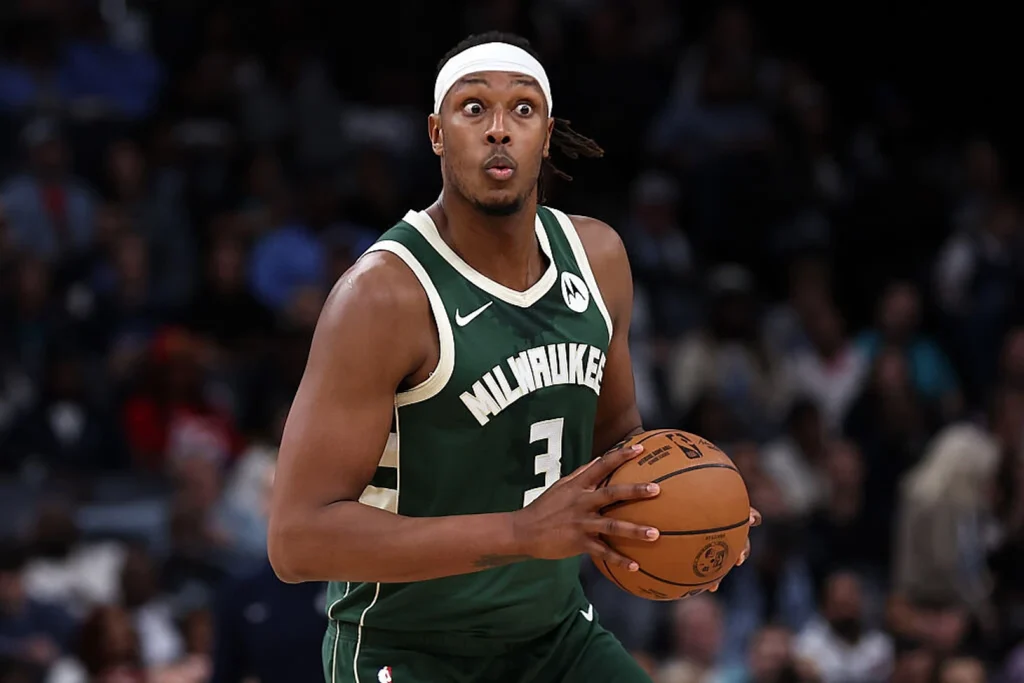
12.4 points + 5.3 rebounds + 1.6 assists + 1.5 blocks + 1.0 turnover in 28.5 minutes; 42.2% FG – 38.7% 3PT – 75.7% FT
Turner’s season reads like a cautionary tale about “fit” and “context” more than talent.
Milwaukee paid for a specific version of Turner: spacing big, screen setter, functional rim presence, someone who could stabilize a shifting frontcourt. The three-point shooting is fine (38.7%). The rest has not landed.
The Offensive Environment Changed—and So Did His Value
The text draws a clear contrast between his prior ecosystem and Milwaukee’s:
- Indiana lived on ball movement and pace.
- Milwaukee is slower, more screen-centric, and more star-gravity dependent.
- Transition threes that once appeared naturally now appear rarely.
- Turner’s heat map has tilted toward perimeter standing and screening, with far fewer paint touches.
The interior shot share is at a career-low:
- Paint attempt share: 27.6% (previously rarely below 36%, sometimes above 50%)
- Paint FG%: 53% (career-worst, per the text)
This is not inherently “wrong” if it’s what Milwaukee wanted. The problem is what they didn’t get on the other end: Turner is not replicating peak Brook Lopez-level defensive dominance. The text cites mobility and processing limitations (legs, center of gravity, reads). And the overall result is a defense sitting 19th—far from what the Bucks were trying to buy.
Closing Thought: Why This Group Stings
The common thread across this “Frustration Five” isn’t simply decline or bad luck. It’s misalignment between role, contract, and on-court reality.
- Mobley has the tools and the opportunity, but not the offensive leap.
- Banchero has the confidence and volume, but not the efficiency or cohesion.
- Morant has the name and salary, but not the foundational traits modern lead guards require.
- Butler is productive—but asked to be something the roster construction can’t support.
- Turner fits the idea—but not the living, breathing version of Milwaukee basketball.
When half a season is gone, disappointment stops being a mood and becomes a pattern.
All NBA news is here!