A third of the season in, the San Antonio Spurs sit near the top of the Western Conference standings and have already eliminated the Oklahoma City Thunder from the NBA Cup. The progress is real, but the timeline still matters. Through eight key questions, we examine how serious the Spurs are — and when Wembanyama’s team may truly be ready for a playoff breakthrough.
Has San Antonio Been Overpraised Due to an Easy Schedule?
The schedule has indeed been favorable. One of the softest in the league so far, in fact. That naturally invites skepticism: is San Antonio’s win percentage ahead of its actual level?
Not quite.
What the calendar has given, injuries have taken away. Victor Wembanyama missed 12 games, Dylan Harper 10, Stephon Castle nine, while De’Aaron Fox and Luke Kornet missed eight each. All five rank among the team’s top nine in minutes per game. Continuity has been a luxury, not a given.
The first time the Spurs fielded something close to a full roster came just before the NBA Cup semifinal against Oklahoma City — with an asterisk standing 7-foot-4 tall. Medical staff limited Wembanyama to roughly 20 minutes.
For nearly two months, interim head coach Mitch Johnson played lineup Tetris. Pieces kept falling, were rotated, tested, and removed again. For a young team, that chaos is usually destructive.
This time, it wasn’t.
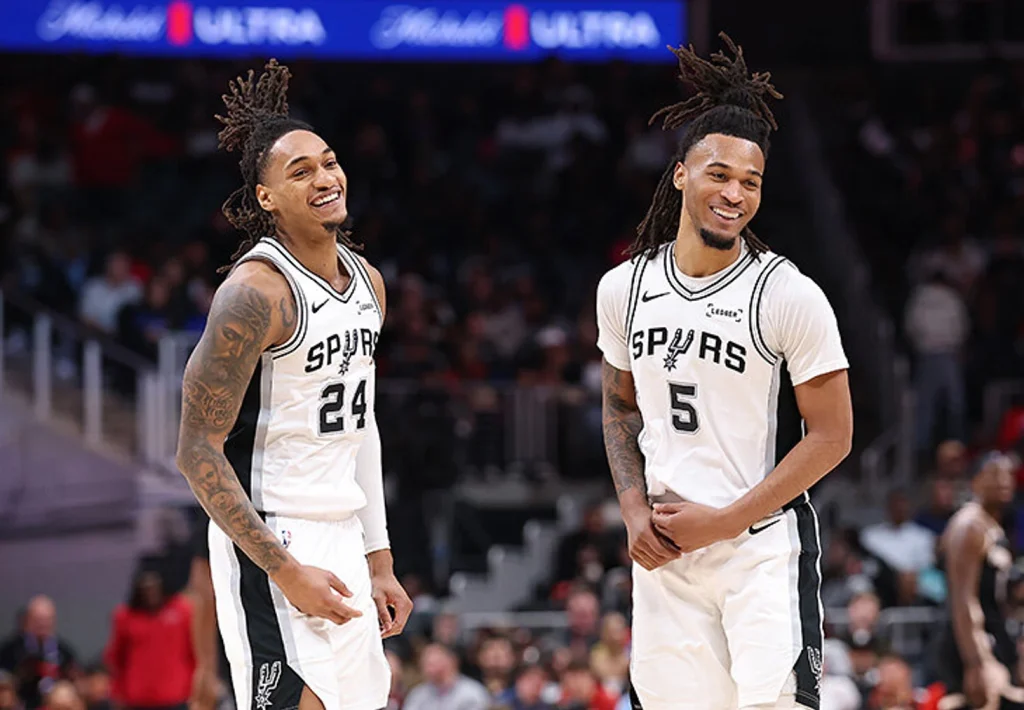
The Spurs turned instability into experimentation. Multiple starting units, guard-heavy lineups with Fox, Castle, and Harper, Devin Vassell initiating offense, Jeremy Sochan as a small-ball center — everything was tested. What emerged was a deep data set, invaluable for long-term construction.
And through it all, San Antonio kept winning. By December 20, they had beaten Houston, Denver, the Lakers, and Oklahoma City — all top-five teams in the West at the time.
These are still early steps. The hardest tests remain ahead. But no one in the league dismisses the Spurs anymore.
Are the Spurs Legit Contenders — or Just Ahead of Schedule?
They are legitimate — within context.
San Antonio could have reached the Play-In a year ago if it wanted to. Instead, the organization chose patience. That phase appears over.
Right now, the Spurs are a good team without Wembanyama and a dangerous one with him. They went 9–3 in games he missed, consistently beating weaker opponents — which alone can secure a sixth-to-eighth seed in today’s NBA. Since mid-November, they rank among the top five offenses in the league.
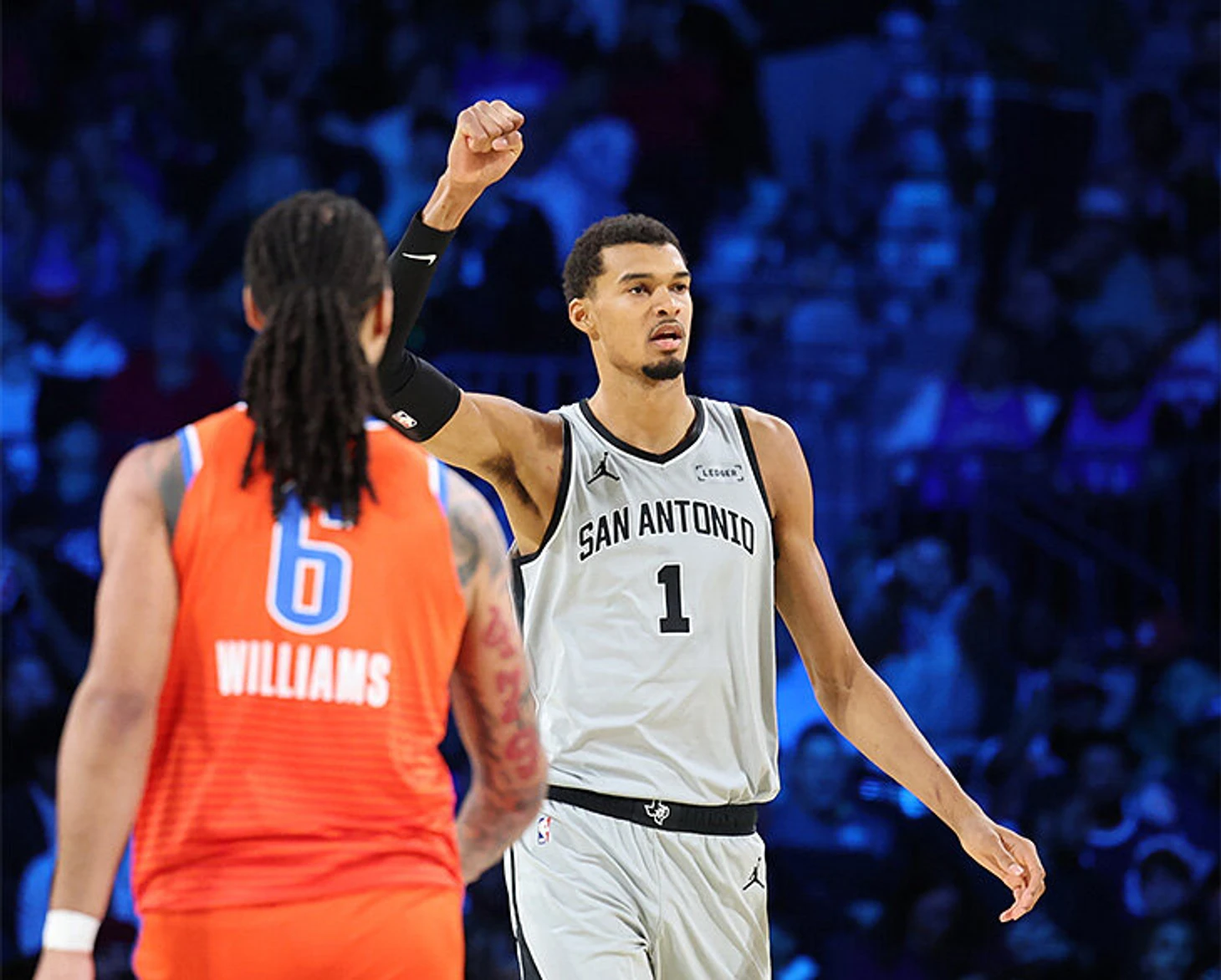
With Wembanyama, they become volatile in the best sense. On the right night, they can beat anyone. The NBA Cup semifinal against Oklahoma City proved that.
But inexperience still shows. In the Cup final against New York, composure evaporated in the closing minutes. Decisions sped up, execution broke down, and the game was lost in a matter of possessions.
That is normal. Even necessary.
For now, trusting the Spurs in a long playoff series against elite contenders would be premature. Respecting them — and preparing seriously for them — is not optional.
San Antonio understands this. There is no rush. Time is working in their favor.
How Did the Spurs Slow Things Down Last Season?
Deliberately.
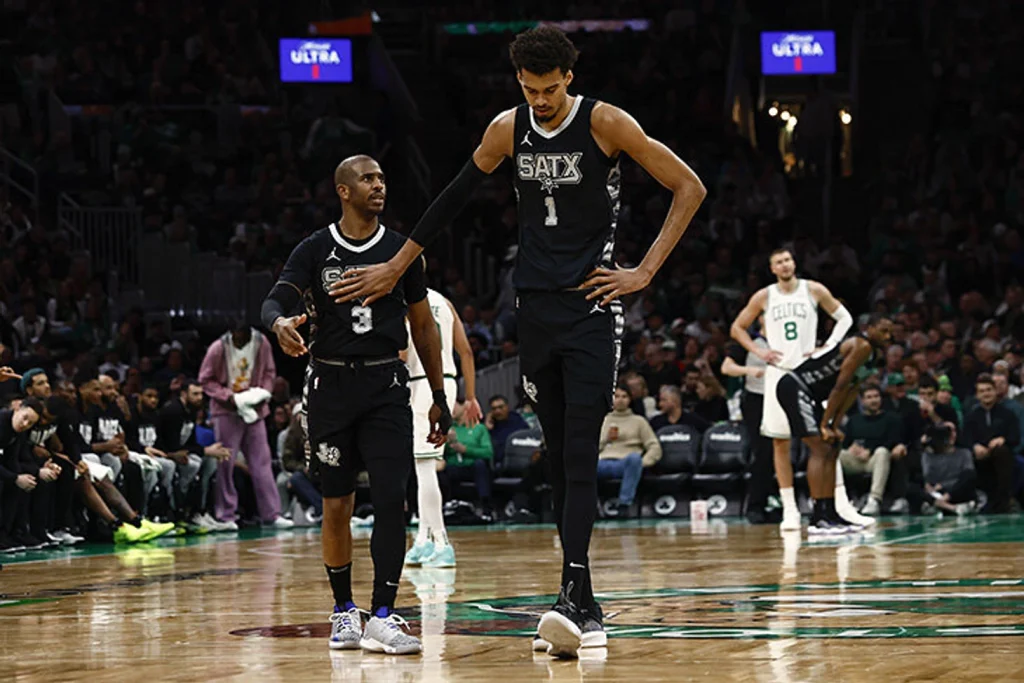
Chris Paul started all year. A future Hall of Famer, but far closer to his late-career version than the one seen in Phoenix in 2021. The offense slowed, isolations increased, and ball movement stagnated.
It was a transaction, not a mistake. Paul received minutes and freedom; the Spurs received mentorship and losses.
Development stalled for players like Devin Vassell and Keldon Johnson. In theory, Paul was meant to accelerate Wembanyama’s pick-and-roll education. In practice, defenses ignored Paul’s scoring threat and overloaded on the French rookie.
San Antonio adapted. Wembanyama drifted further from the rim, three-point volume exploded, and eventually De’Aaron Fox was acquired. Long term, it was a steal. Short term, Fox and Paul were oil and water.
After Fox underwent finger surgery and Wembanyama later missed time due to a blood clot, the season ended quietly: 13th in the West, a lottery bounce, and Dylan Harper.
Once Wembanyama’s health stabilized, it became clear: staying below the Play-In was no longer realistic. The Spurs resurfaced quickly — perhaps too quickly — reaching the NBA Cup final and climbing near the top of the conference.
The transformation has begun. The finish will take time.
Why Not Push All the Chips In Now?
Because timing matters more than momentum.
The Spurs possess a strong core, surplus draft capital, and several movable contracts. Under the second apron rules, mistakes are punished harshly. Every major move must be precise.
San Antonio is still diagnosing itself. The toughest remaining test is sustainability. Upsets happen. Consistency defines contenders.
The remaining schedule is the third-hardest in the league. Three games against Oklahoma City in three weeks loom. The Thunder will not forget the Cup semifinal.
These games will serve as stress tests — not for wins, but for answers.
What Does San Antonio Look Like Right Now?
More organized. More mature.
Following the Cup final loss, the Spurs delivered back-to-back blowouts: plus-25 against Washington and plus-28 against Atlanta. Calm, controlled, professional. That had been missing before.
They now rank top-10 in both offensive and defensive efficiency, excel in transition, and have restored balance to their three-point offense — fewer attempts, higher quality.
Mitch Johnson deserves credit. Thrust into replacing Gregg Popovich under difficult circumstances, he has stabilized the operation. Nothing revolutionary — but adjustments are timely, communication is clear, and panic is absent.
Flaws remain. Perimeter defense can collapse. Late-game reliance on De’Aaron Fox occasionally backfires. These are management problems more than coaching ones.
Who Are the Primary Trade Candidates?
Several contracts expire soon. Kelly Olynyk’s deal is more valuable than his minutes. Harrison Barnes has been useful but unreliable from deep when it matters.
Jeremy Sochan’s situation is delicate. The three-point shot still hasn’t arrived, limiting his offensive value. A restricted free agency decision looms, and San Antonio has already drafted Carter Bryant as insurance.
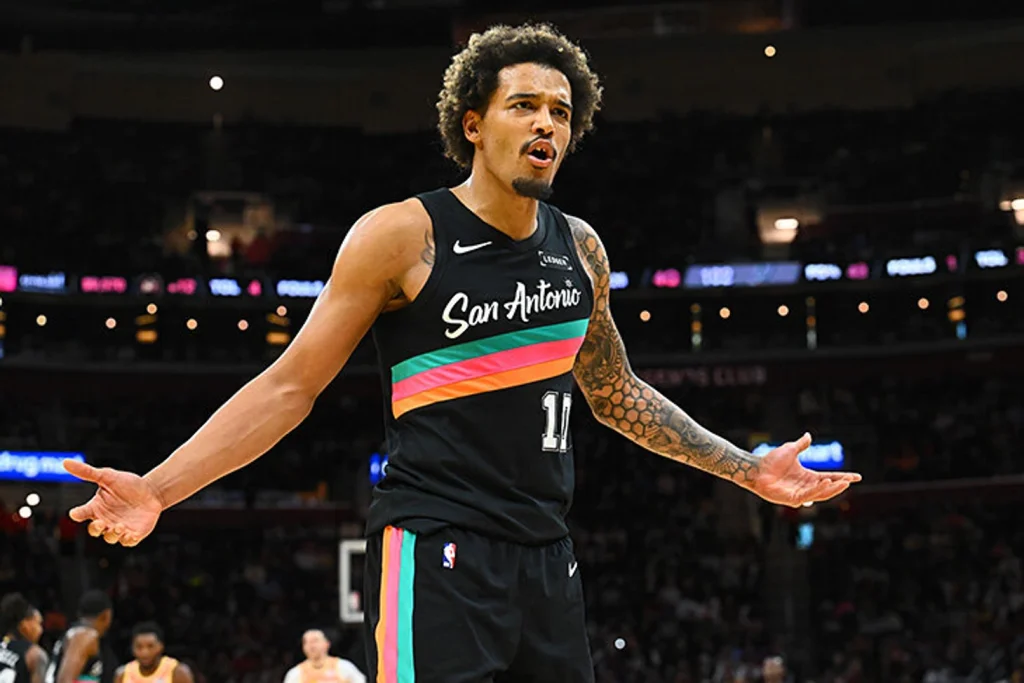
Vassell and Keldon Johnson remain intriguing. Both are efficient scorers on reasonable contracts, but touches are scarce with three ball-dominant guards.
The backcourt is crowded. Fox was worth the price. Dylan Harper was the correct draft choice. But pressure will come. Guards of this caliber always attract interest.
Options exist. The challenge is choosing correctly.
What About Wembanyama Himself?
The experiments have paused — and that is a good thing.
Wembanyama’s average shot distance has dropped by 1.5 meters year over year. Three-point attempts are at a career low. He lives closer to the rim, rebounds more, and acts as a gravitational force inside. Efficiency is up. Space for teammates has improved. Defenses react instinctively to his presence. He is not yet a master decision-maker under pressure. That test awaits in the playoffs. Health and adaptation to speed remain the two open questions. But the direction is clear. Wembanyama’s true ceiling will not be unlocked through perimeter skill, but through mastery of his physical advantages — much like Giannis Antetokounmpo before him.
Basketball IQ, timing, and instant reads will define the final leap.
San Antonio is moving carefully. Building the right ecosystem will be easier than unlocking the player himself. Knowing what to build around — that is the real question.
As the regular season continues, upcoming matchups will provide clearer answers about where San Antonio truly stands in the Western Conference hierarchy. Fans can follow the full NBA schedule and game results, while tracking the latest Spurs updates and league-wide news as the playoff picture begins to sharpen.