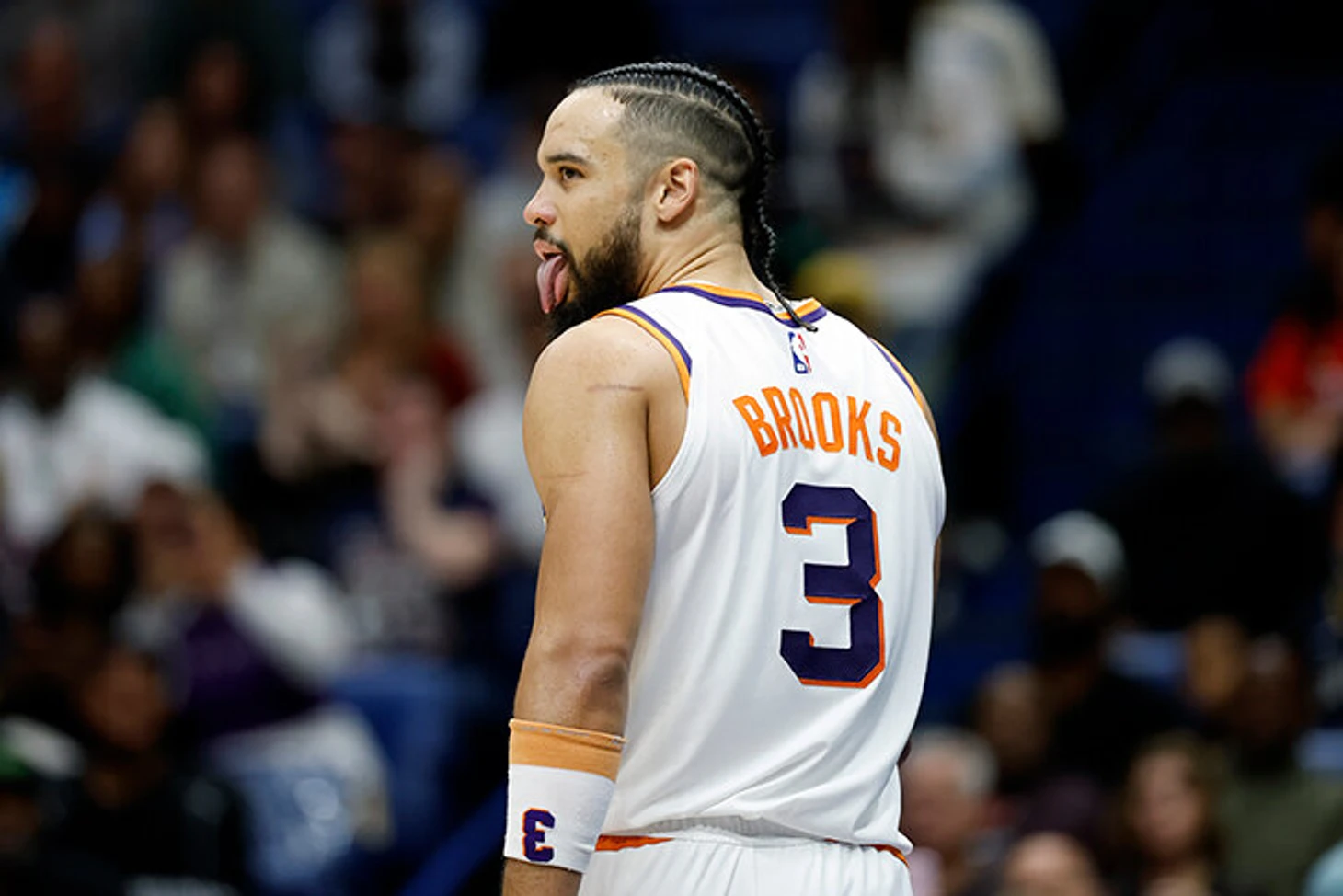
At first glance, Dillon Brooks looks like a caricature: loud, abrasive, and permanently on the edge of controversy. In reality, he has become one of the most deliberately constructed characters in the modern NBA—an uncomfortable presence whose impact reaches far beyond box scores and shooting percentages. As Phoenix continues its unexpected rise, Brooks once again proves that some players change teams not with talent alone, but with attitude, pressure, and identity.
Chapter One: Dirt
The Phoenix Suns have already been discussed at length this season. It is time to isolate one of the key components behind the transformation of a team many had written off before January.
That component is not a star scorer or a system tweak. It is the fifth element—unpleasant, volatile, and structurally essential.
Dillon Brooks.
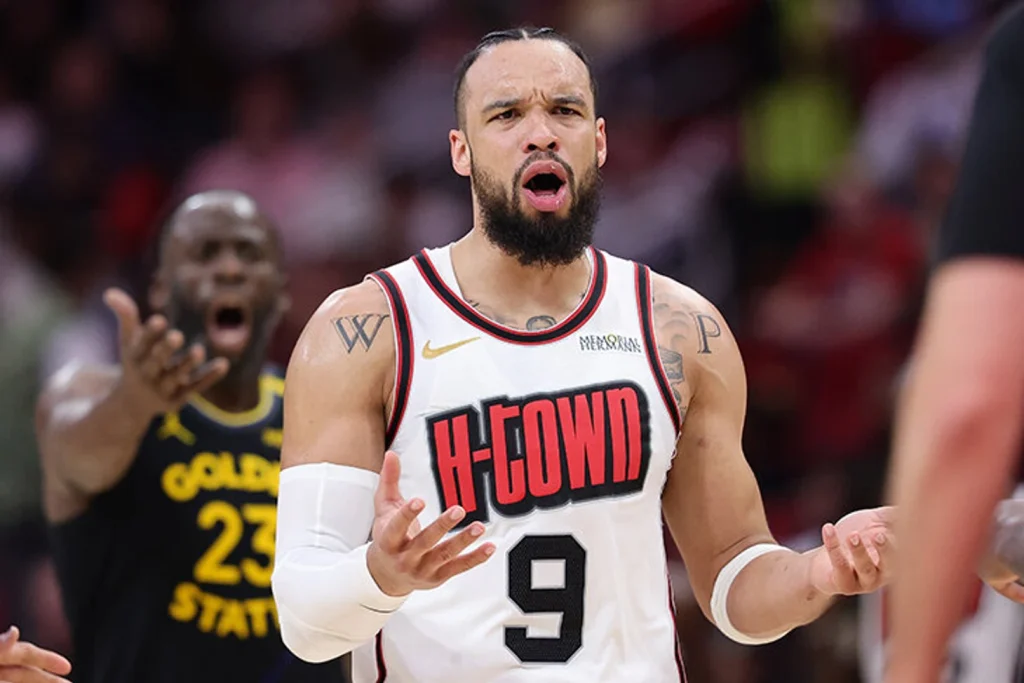
Brooks’ worst moments are well documented, and he continues to add to the archive. From targeting Stephen Curry’s injured finger in the playoffs to delivering borderline hits on players ranging from James Harden to Trae Young, from on-air profanity to relentless trash talk directed at opponents and fans alike, Brooks exists in a permanent state of confrontation.
He routinely ranks among league leaders in technical and flagrant fouls. His defensive aggression frequently crosses into outright physicality. Watching him, one is often tempted to ask the same question fans and opponents ask every season: how does he keep getting away with this?
The easy answer is to label him the league’s villain, a spiritual successor to Draymond Green. The harder—and more accurate—answer is that Brooks is far more valuable than the caricature suggests.
He is not simply a player teams love to hate and hate to play against. He is a cultural force, one that has now reshaped three different franchises.
Survival as a Playing Style
Brooks is paid to provoke. Literally.
His current contract—four years, $86 million—exists precisely because of the chaos he creates. As Andre Iguodala once bluntly put it, some players would not survive in the NBA without an extreme personality and unwavering belief in themselves. Brooks is one of them.
Talent alone never carried him. Three solid but unspectacular college seasons at Oregon, a second-round draft selection in 2017, and early comparisons to low-ceiling role players painted a clear picture: survive or disappear.
In Memphis, he survived by force. The franchise was transitioning out of the “Grit and Grind” era, losing veterans like Marc Gasol and Mike Conley while stockpiling young talent. Brooks received minutes early, partly because the team needed development, partly because losing had strategic value. He embraced the opportunity.
As Ja Morant emerged and the Grizzlies rose to contender status, Brooks remained a starter, eventually earning All-Defensive Team recognition. Yet after a first-round playoff exit to the Lakers in 2023, he became expendable. Memphis decided it had outgrown him.
Houston repeated the cycle. Brooks arrived to a rebuilding roster that had struggled for years. Results followed immediately. Wins increased. Defensive identity formed. The Rockets pushed Golden State to seven games in the playoffs. And then, once again, Brooks was moved—this time to Phoenix as part of the Kevin Durant deal.
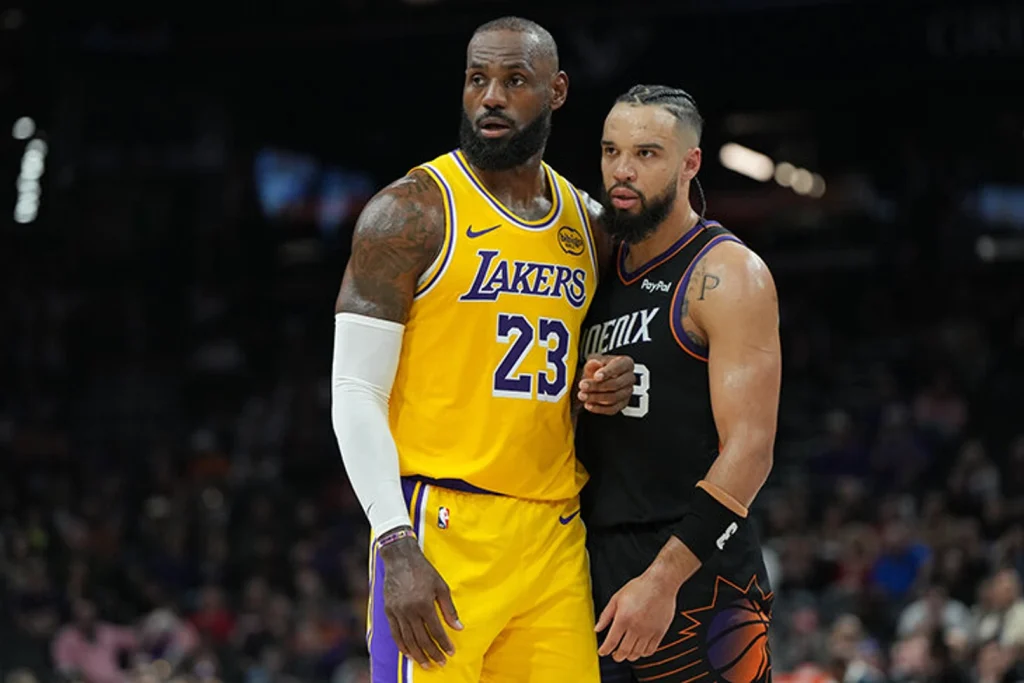
By January, the Suns—short on individual creators and long on uncertainty—were winning at a significantly better pace than the previous season. Brooks was central to that improvement.
Chapter Two: Inside the Locker Room
Brooks’ defining trait is not defense, shooting, or toughness in isolation. It is his ability to be more than the sum of his basketball skills.
On the court, he is reckless. Off it, former teammates describe a different figure entirely.
Desmond Bane once detailed Brooks’ daily routine: arriving first to the gym, working through treatment and conditioning, staying late for additional sessions, and playing through injuries others would not attempt. Jabari Smith echoed the sentiment, calling Brooks one of the most underrated leaders he had encountered.
Former NBA center Ryan Hollins, now covering Houston games, went further. According to Hollins, Brooks set the emotional standard. The Rockets were told to let him be himself—and the team followed.
This is the hidden value Brooks brings. Playing next to him, it becomes difficult to coast. Effort becomes non-negotiable. Accountability becomes unavoidable.
His role resembles that of the classic enforcer, adapted for modern basketball. He tests boundaries not to see how much he can get away with, but how much discomfort the opponent can tolerate before breaking.
Chapter Three: Origins of the Edge
Brooks’ background offers clues, though details are scarce.
Raised in Ontario, he learned discipline early. One story defines it: during a snowstorm, he asked his mother to turn the car around on the way to practice. Her response was simple—skip practice once, and she would never drive him again.
Information about his father is minimal, but what exists paints a familiar picture: a former boxer, physically imposing, accustomed to hard labor. According to acquaintances, father and son would wrestle for fun. Hardness was normal. Resistance expected.
That upbringing shows in Brooks’ uncanny ability to walk the line between provocation and control. Being hated is easy. Being hated for years without losing credibility requires precision.
The Basketball Reality
Strip away the theatrics, and Brooks remains a flawed player.
His shooting efficiency is consistently below league average. His offensive decision-making can stall ball movement. His love for contested mid-range shots and isolations often produces poor returns. His turnovers outweigh his playmaking value.
Yet the flashes remain undeniable. Thirty-five-point nights. Clutch shot-making. International dominance, including a 39-point performance against Team USA at the 2023 World Cup.
The fouls, the technicals, the suspensions—those come with the territory. Brooks leads the league in technical foul frequency for a third straight season. That is the cost of constant confrontation.
Teams accept it because the alternative—a passive, identity-less roster—is worse.
Why Phoenix Needs Him
Phoenix cannot outgrow Dillon Brooks.
The payroll is locked. Draft assets are gone. There is no realistic path to internal reinvention in the short term. Brooks fills a role that cannot be replaced by a rookie or a role player.
His contract runs through the summer of 2027. By then, he will be 31. In Phoenix, he is valued, protected, and understood.
He is not the most skilled defender in the league. He does not see the floor like Draymond Green. But he gives teams something harder to find: edge, resistance, and emotional gravity.
The Suns did not acquire Brooks for efficiency. They acquired him to become something unpleasant—and therefore competitive.
The question that remains is not whether Dillon Brooks can change teams.
It is whether, if he ever finds peace, he can remain Dillon Brooks at all.
Check more NBA News HERE