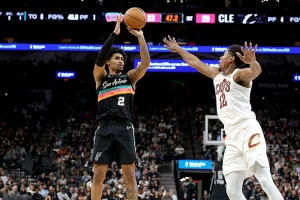
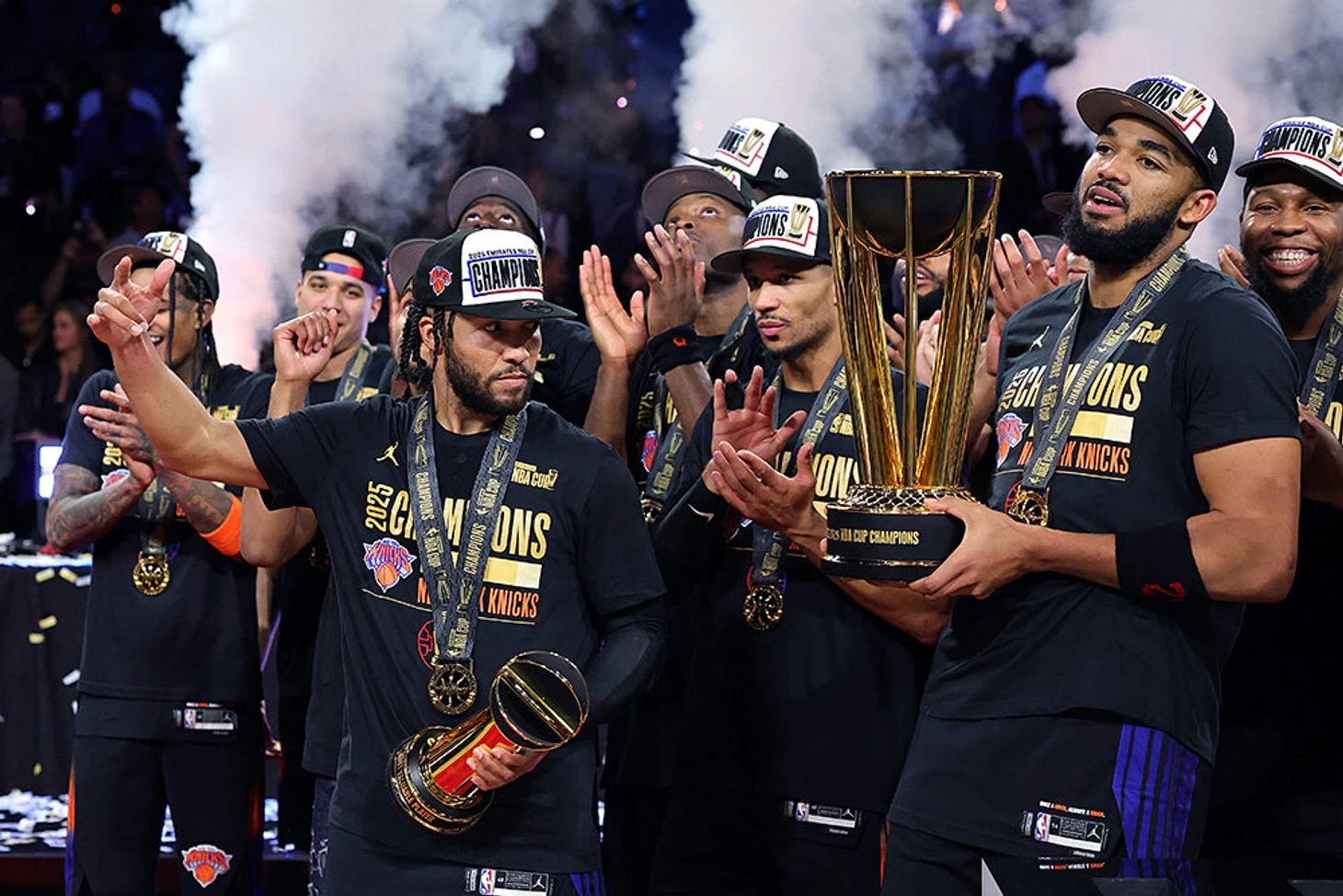
The New York Knicks rallied in the fourth quarter to defeat the San Antonio Spurs 124–113 in Las Vegas, capturing the NBA Cup and securing the franchise’s first trophy of the 21st century. Jalen Brunson earned MVP honors as New York combined star power, depth, and urgency to outlast a young Spurs team still learning how to win on the biggest stages.
A Long-Awaited Trophy for New York, Led by Jalen Brunson
The Knicks’ NBA Cup victory may not carry the historical weight of an NBA championship, but for a franchise starved of silverware, it matters. A lot.
Jalen Brunson was the clear centerpiece. The Knicks guard finished the final with 25 points and eight assists, controlling tempo in the second half and earning NBA Cup MVP honors by an overwhelming margin. Only one media voter went in another direction, selecting OG Anunoby, while a small portion of fan votes landed on Victor Wembanyama.
For New York, this was more than a single-game triumph. It was the organization’s first trophy since the pre-merger era, when Willis Reed and Walt Frazier led championship teams in 1970 and 1973. Since then, even symbolic victories have been rare. The Knicks did not win a Summer League title in the modern era, and their lone post-1970s hardware was a 1990 preseason McDonald’s Open trophy during the Patrick Ewing era.
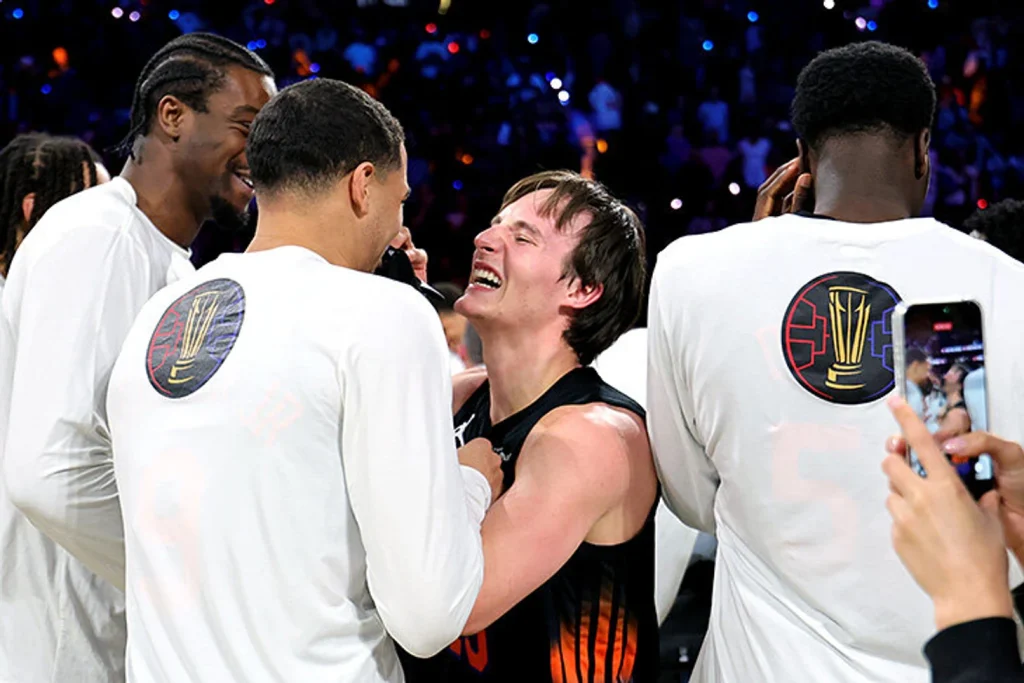
Brunson, a two-time NCAA champion, was signed in 2022 precisely for moments like this. The Knicks did not bring him in to chase individual accolades, but to establish a winning culture. This NBA Cup title does not replace playoff success, but it reinforces belief inside the organization that Brunson is the right leader for what comes next.
Money Still Matters, Even in a Billion-Dollar League
Each Knicks player earned approximately $531,000 for winning the NBA Cup, with two-way contract players receiving half. For stars like Brunson or Karl-Anthony Towns, whose annual salaries exceed $35 million and $50 million respectively, the bonus is marginal.
For others, it is not.
Brunson acknowledged that financial motivation played a role, not for himself but for teammates and staff members whose earnings are far more modest. Tyler Kolek, in just his second NBA season, spoke about buying gifts for his parents. Towns plans to donate his share to charity in the Dominican Republic. Jordan Clarkson, newly arrived from Utah, mentioned using the money toward rent. Josh Hart joked about replacing watches stolen earlier in the year.
The league has struggled to generate intensity in exhibition-style events, most notably the All-Star Game. The NBA Cup has succeeded, in part, because tangible incentives still resonate across a roster. Players may be wealthy, but meaningful stakes change behavior.
Depth and Trust Define This Version of the Knicks
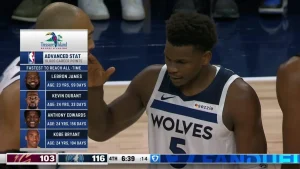
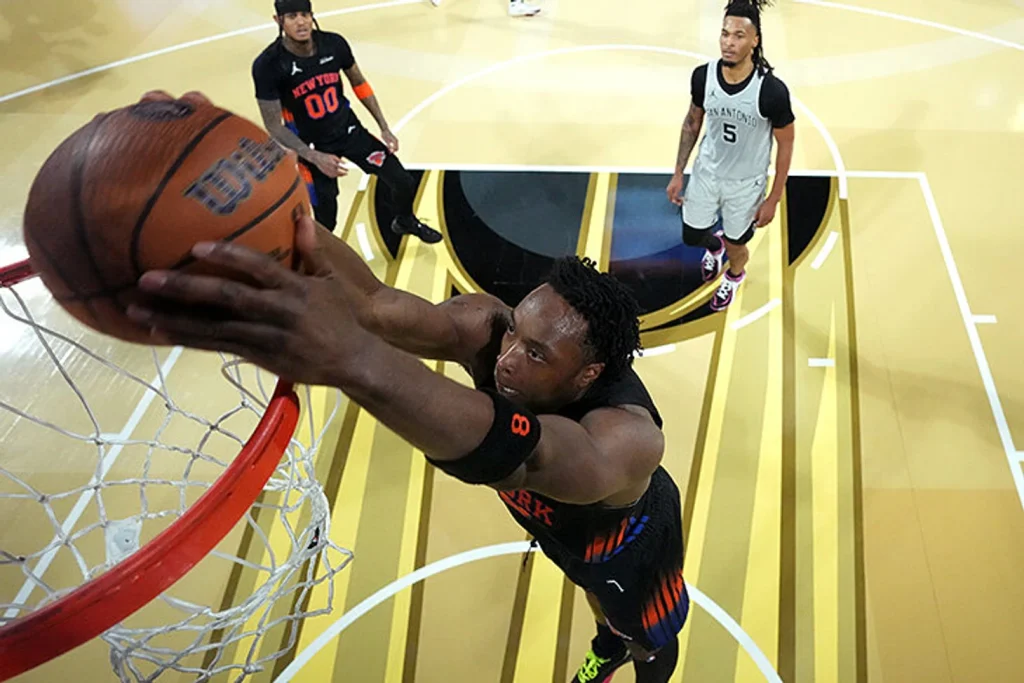
OG Anunoby led all scorers with 28 points, but New York’s comeback was not driven by one player alone. Jordan Clarkson provided 15 points off the bench, hitting timely three-pointers during a decisive late-third and early-fourth-quarter stretch. He also shared the team-best plus-minus with Brunson.
Perhaps more important was how Knicks head coach Mike Brown distributed responsibility. Unlike previous iterations under Tom Thibodeau, this version of New York embraces flexibility. Brown trusted Kolek in key fourth-quarter minutes, leaving veteran Mikal Bridges on the bench during crunch time.
The Knicks’ most unconventional weapon may be Mitchell Robinson. The backup center is producing one of the most dominant offensive rebounding seasons in NBA history, recovering nearly 30 percent of his teammates’ missed shots. Against San Antonio, Robinson grabbed 10 offensive rebounds alone.
That advantage is not cosmetic. New York averages roughly four more possessions per game than its opponents due to offensive rebounding and another 1.5 from limiting turnovers. Over the course of a game, those extra opportunities often decide outcomes.
San Antonio Is Ahead of Schedule, Even in Defeat
The Spurs controlled much of the game before collapsing under New York’s pressure in the fourth quarter. For a young roster, that experience matters.
History offers encouragement. The last two NBA Cup runners-up reached the NBA Finals quickly: Indiana did so the following season, while Oklahoma City advanced in the same year and ultimately won the championship.
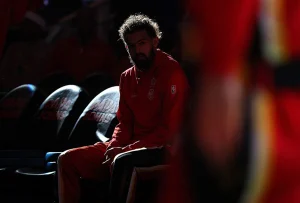
Victor Wembanyama came off the bench again, scoring 18 points in 25 minutes. He was not fully himself, both physically and emotionally. Wembanyama’s grandmother passed away on the day of the final, and he did not speak to the media afterward. His subdued demeanor during timeouts reflected the weight of the moment.
San Antonio also experimented with a three-guard lineup featuring Stephon Castle, De’Aaron Fox, and rookie Harper, who scored 21 points. The configuration remains a work in progress, but it is exactly the type of trial worth monitoring as the Spurs look ahead to the postseason.
For young teams, meaningful games are developmental accelerants, even when they end painfully.
The NBA Cup Needs a New Stage
Las Vegas hosted the NBA Cup semifinals and final for the final time in this format. Beginning next season, only the championship game will be played on a neutral court, and even that location remains undecided.
The atmosphere in Las Vegas was subdued. With no local NBA fan base and limited culture around traveling supporters, the games felt closer to the pandemic-era bubble than a marquee event. That detracted from the spectacle.
The league has explored alternatives, including international venues, though player resistance to midseason long-haul travel is significant. A more compelling solution under consideration is hosting the final at iconic college basketball arenas, some of which exceed NBA venues in capacity and intensity.
Imagine Brunson, Mikal Bridges, and Josh Hart celebrating an NBA Cup title in front of Villanova fans. That type of connection could elevate the tournament instantly.
The NBA Cup is not a finished product, but the concept has proven viable. The competition is real, the incentives are meaningful, and the league has room to refine the presentation. Most importantly, players care—and that ensures the tournament is here to stay.
As the NBA Cup concludes, the regular season continues to gain momentum, with playoff races beginning to take shape across both conferences. Fans can follow the latest NBA schedule and game results, as well as stay up to date with all league news, analysis, and breaking developments throughout the season.