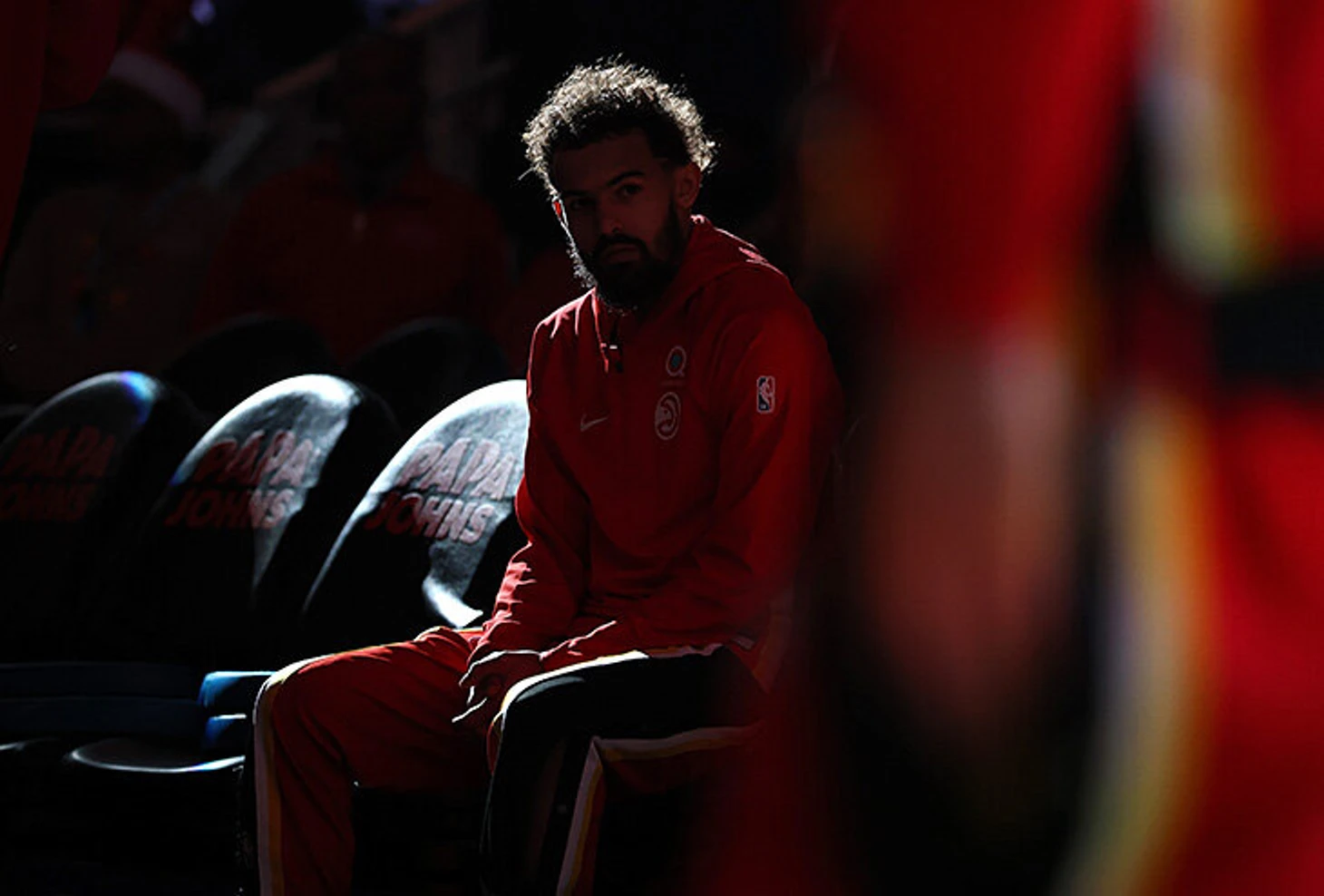
After seven and a half seasons, the Atlanta Hawks moved on from Trae Young, sending their longtime franchise guard to the Washington Wizards in exchange for CJ McCollum and Corey Kispert. No draft picks. No young blue-chip prospect. The deal raised immediate questions: why now, why this return, and what does each side actually gain? A closer look at performance data, roster context, and long-term incentives explains why this move was inevitable — and why it may make sense for everyone involved.
Why Atlanta Decided to Move On
From Atlanta’s perspective, the conclusion was simple: the organization believed it had outgrown Trae Young.
For years, Young functioned as the engine of the Hawks’ offense, carrying an otherwise limited roster. Over time, however, his individual efficiency declined while the surrounding talent improved. Structural changes followed. Quin Snyder was hired as head coach in February 2023, and after a play-in exit in April 2025, general manager Landry Fields was dismissed and replaced by Onsi Saleh.
With new leadership came a clean slate. Neither Snyder nor Saleh had professional ties to Young, and ownership — despite a publicly warm relationship with the guard — faced a harsher reality. Attendance continued to decline, and Atlanta remained stuck in the Eastern Conference’s 9–10 range. Financial considerations eventually outweighed loyalty.
Atlanta had long suspected that Young’s impact no longer justified his role. Injury absences provided tangible proof.
- With Young: 2–8 record (20% win rate)
- Without Young: 16–13 record (55% win rate), equivalent to a 6th–7th seed pace
The Hawks demonstrated they could remain a play-in-level team without their star. Paying more while slowing internal development no longer made sense.
Was Trae Young Actually Hurting the Team?
League-wide trends toward size, athleticism, and defensive versatility had already placed Young under scrutiny. A small guard with limited defensive value must compensate by producing elite offense. Over the past three seasons, the data suggests that did not happen.
Offensive impact (points per 100 possessions)
- 2022/23: 116.4 with Young, 117.1 without
- 2023/24: 117.4 with Young, 117.1 without
- 2024/25: 114.3 with Young, 115.2 without
Atlanta’s offense did not meaningfully improve with him on the floor.
Defensive impact (points allowed per 100 possessions)
- 2022/23: 119.2 with Young, 111.8 without
- 2023/24: 121.5 with Young, 115.7 without
- 2024/25: 119.4 with Young, 110.1 without
Even the smallest defensive gap exceeded four points per 100 possessions — the difference between an elite and an average defense. At its peak, the gap reached 9.3 points, larger than the distance separating top-tier defenses from bottom-five units.
In short, Young neither elevated the offense nor survived defensively in a league that increasingly punishes such limitations.
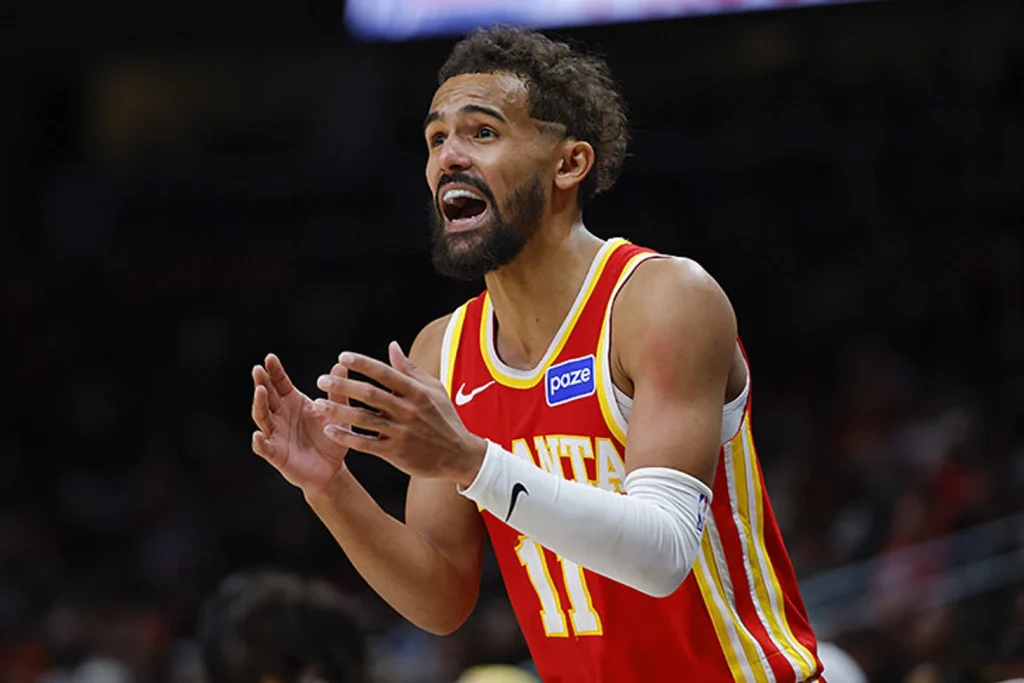
“Who Scores Without Him?” Atlanta’s Actual Offensive Core
Contrary to surface-level concerns, Atlanta has multiple emerging creators.
- Jalen Johnson has developed into a near-All-Star caliber player:
24 points, 10.5 rebounds, 8.5 assists, 1.4 steals on 52% shooting and 37% from three. He is efficient, versatile, and defensively engaged. - Nickeil Alexander-Walker evolved beyond a defensive role player:
20.5 points, 3.5 rebounds, 3.5 assists, shooting 44.7% overall and 38.3% from three on high volume. - Onyeka Okongwu, now 25, is no longer a limited rim-runner:
16 points, 8 rebounds, 3 assists while hitting 36% from deep on over five attempts. - Vit Krejčí, once on the fringe of the league, has become a high-efficiency role player:
47% from three on six attempts per game with strong off-ball defense.
Atlanta is young, functional, and improving — without requiring a ball-dominant guard to monopolize possessions.
Was Trae Young Ever Truly Great?
Absolutely.
Young’s legacy cannot be reduced to his exit. The 2021 Eastern Conference Finals run happened because of him. Atlanta reached its second conference finals in 55 years largely due to Young’s playmaking and shot creation.
In that postseason, he averaged 29 points and 9.5 assists, eliminated New York and Philadelphia, and played through injury against Milwaukee after damaging his ankle mid-series.
Supporting cast production was modest at best, and many contributors later regressed into role players or exited the league entirely. Young carried that group, earned All-Star recognition, and made an All-NBA Third Team shortly after.
Atlanta owes him gratitude — even if the partnership no longer worked.
Why the Return Was So Small
Atlanta sold at the lowest point of Young’s market value.
He is an offense-only guard, defensively exploitable, effective only with high usage, and approaching a contract decision. His player option for $49 million loomed as a financial constraint, not an asset.
The Hawks did not trade a superstar. They traded a high-usage first option with structural limitations.
More importantly, the real return was flexibility.
McCollum’s expiring contract, Kispert’s team-friendly deal, and the removal of Young’s future salary open meaningful cap space. Atlanta projects to have roughly $30 million in spending power, with Jalen Johnson as the highest-paid player through 2030.
In a second-apron NBA, that freedom is invaluable.
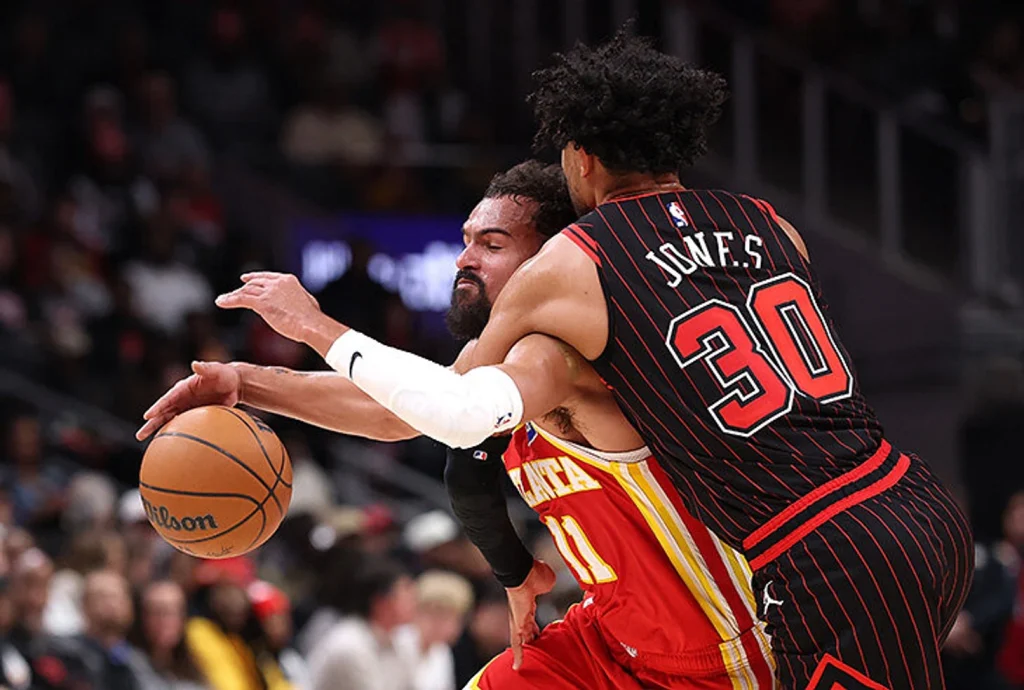
Why Washington Made the Move
Washington could afford the risk.
The Wizards’ front office includes Travis Schlenk, the executive who drafted Young and believed in him from the start. With a clean cap sheet and minimal long-term salary commitments, Washington took a calculated look.
If Young works, they extend him.
If he doesn’t, they let him walk in 2027.
Washington sacrificed no draft capital and no core prospects. McCollum was unlikely to be re-signed, and Kispert, while useful, was expendable.
Developmental concerns exist — Young will dominate the ball — but Washington lacks proven creators anyway. For now, structure and shot quality may actually improve.
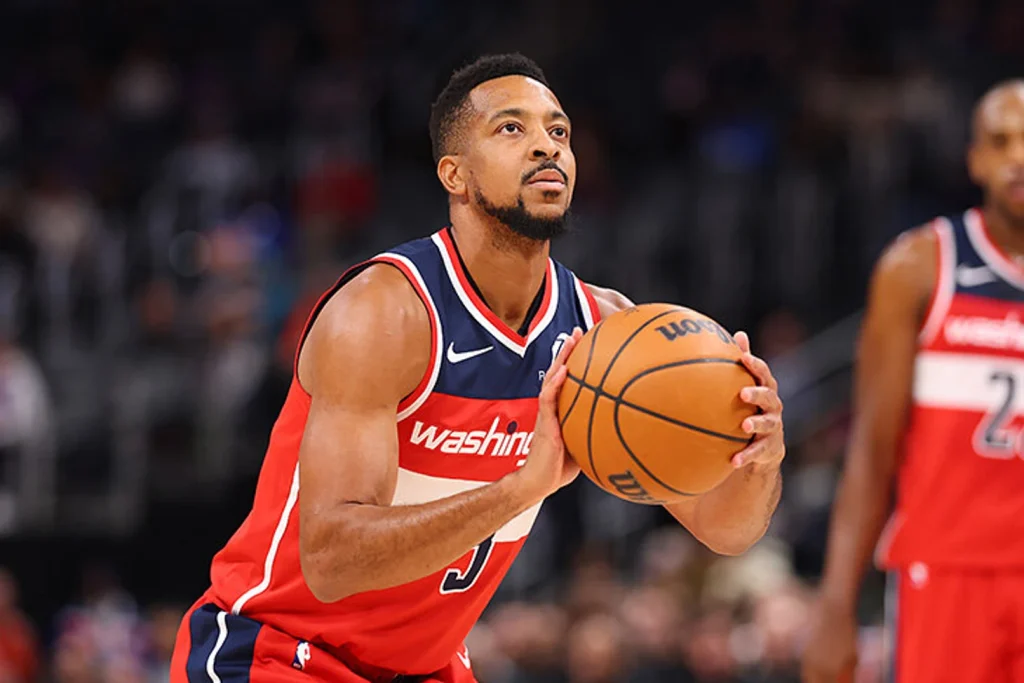
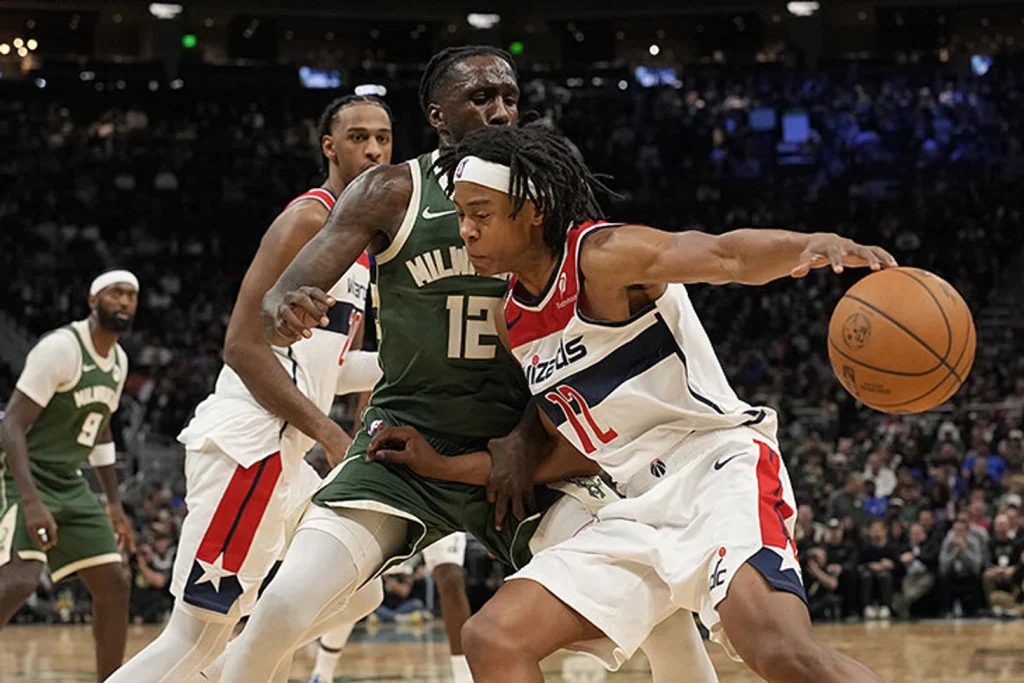
Why Young Wanted Washington
For Young, this move offers something Atlanta no longer did: unconditional belief.
His career has shown that he thrives when fully empowered. Washington offers status, control, and patience — without pressure to contend. If this is his final attempt to validate his archetype, it will be on his terms.
And if it fails, free agency awaits.
Final Assessment
Atlanta gained flexibility, clarity, and developmental freedom.
Washington gained a low-risk evaluation opportunity.
Trae Young gained control and belief.
Nobody truly “won” the trade — but everyone got exactly what they needed.
When winning is no longer realistic, enjoying the game may be the most honest strategy.
And at that, Trae Young has always been among the league’s best.